
A burst supply line, an overflowing dishwasher or a slow leak behind a vanity can turn into the same question within an hour: how much is this going to cost? It is a fair question, and it deserves a straight answer. The honest one is that water damage restoration cost depends far more on what the water touched, how long it sat and what kind of water it was than on the square footage of the room.
Two Lewisville homes can have the same size wet area and receive very different estimates. One might need a few hours of extraction and a few days of drying. The other might need drywall removal, cabinet work, contents cleaning and repairs. This guide walks through the factors that actually move the number, what a clear estimate should include, and how insurance fits into the picture, so you can read your estimate with confidence instead of guessing.
If water is actively spreading right now, skip the reading and call Regent Restoration at (214) 731-4624. The guide will still be here once the water is stopped.
Key Takeaways
- Water damage restoration cost is driven by scope: the water category, the materials that got wet, how far moisture spread and how quickly drying started.
- Mitigation (removing water and drying the structure) and repairs (rebuilding what was removed or damaged) are separate stages, and a clear estimate shows them separately.
- Delays usually raise the total. Water that sits longer can wick into drywall, flooring and framing and can create conditions for microbial growth within 24 to 48 hours.
- Moisture readings, photos and drying records explain why each line item is on the estimate and help when you speak with your insurer.
- Your insurer decides coverage under your policy. Regent Restoration documents the damage and the work, and the initial inspection is free.
Why There Is No Single Price for Water Damage Restoration
Online price ranges for water damage restoration are everywhere, and most of them are too broad to be useful for a real house. A national average blends a damp laundry room floor with a flooded first story. It cannot tell you whether your subfloor is wet, whether the water came from a clean supply line or a sewer backup, or whether the leak ran for an hour or a month.
That is why a responsible restoration company starts with an inspection rather than a quote over the phone. Until someone takes moisture readings, the visible stain only shows where the water ended up, not where it went. Water moves sideways under flooring, climbs drywall through wicking and collects in wall cavities and under cabinets. The hidden portion of the damage is often what separates a modest estimate from a larger one.
At Regent Restoration, our water damage restoration services begin with moisture detection and mapping. Infrared thermal cameras and penetrating moisture meters help identify hidden water behind walls, under flooring and within ceiling cavities. That map becomes the foundation of the estimate, and it is also what lets us explain each line item to you.
Factor 1: The Category of Water
The restoration industry sorts water losses by contamination level, and the category has a direct effect on what can be saved and what has to go.
- Clean water comes from a sanitary source, such as a broken supply line, a leaking water heater or an overflowing sink with no contaminants. Many materials can often be dried in place when the response is prompt.
- Gray water carries some contamination, such as discharge from a washing machine or dishwasher. More cleaning is involved, and porous materials may need closer evaluation.
- Black water is grossly contaminated, such as sewage backups or rising floodwater from outside. Porous materials it touches, like carpet, pad and lower drywall, are commonly removed rather than dried, and the work requires more protective steps.
Water can also change category over time. A clean water leak that sits for days in a warm house can degrade, which is one of several reasons fast response tends to protect your budget. If your loss involves sewage, review our sewage cleanup service page before attempting any cleanup yourself.
Factor 2: Which Materials Got Wet
Materials absorb and release water at very different rates, and each one carries its own drying or replacement cost.
- Carpet and pad: carpet can sometimes be dried, while saturated pad is often replaced because it holds water and is inexpensive compared with the risk of leaving it.
- Hardwood floors: wood can cup or crown as it absorbs moisture. Specialized drying may save it if work starts early. Our wood floor water damage repair page explains that process.
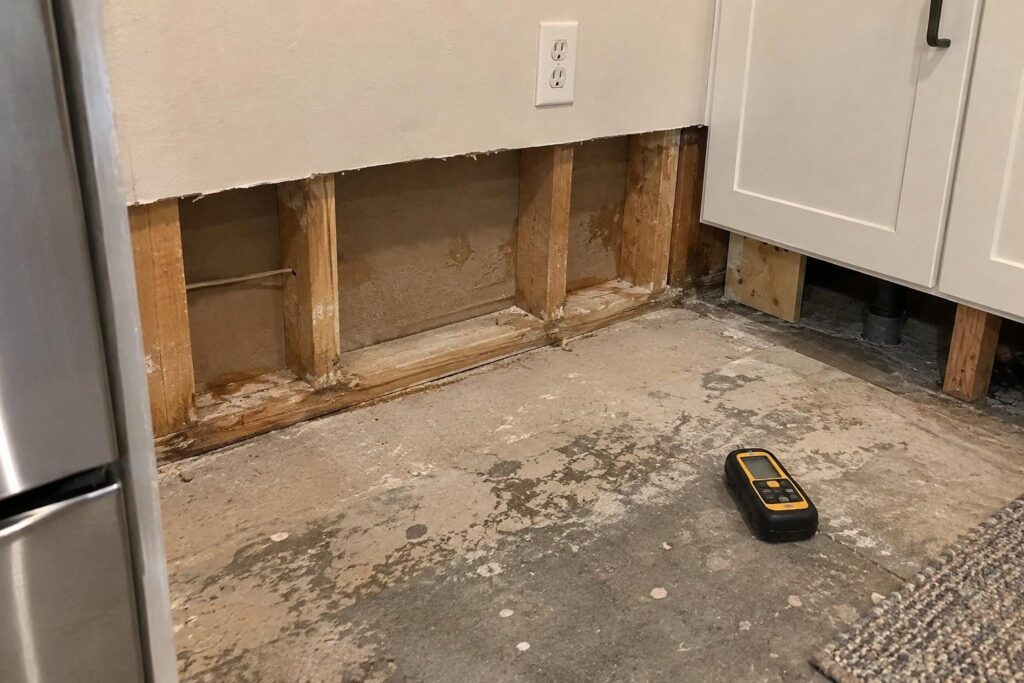
- Drywall and insulation: drywall wicks water upward. Wet insulation inside a wall often has to be removed so the cavity can dry, which usually means cutting the lower portion of the wall.
- Cabinets: water trapped under base cabinets is easy to miss. Toe kicks may need to come off for drying access, and particleboard cabinets that swell are rarely restorable.
- Ceilings: water from an upstairs bathroom or attic leak can saturate ceiling drywall. A sagging ceiling is a safety concern, not just a cosmetic one. Our post on ceiling water stains from common plumbing leaks covers the warning signs.
An estimate for a tile floor in a single bathroom will look very different from one for carpet, baseboards and drywall across two bedrooms and a hallway, even if the amount of water was similar.
Factor 3: How Far Moisture Spread
The size of the affected area matters, but so does the shape of it. Water that travels under a wall plate into an adjoining room, or into a closet full of belongings, adds rooms and contents to the scope. Two-story homes add another dimension, because water from a second-floor bathroom can affect the ceiling, walls and flooring below.
Moisture mapping defines the boundary. Every area inside that boundary needs to be addressed, and every area outside it should be documented as dry so you are not paying for unnecessary work. Ask your restoration company to show you where the readings stopped being elevated. That is a simple way to understand why the estimate covers what it covers.
Factor 4: How Quickly Drying Started
Time is the factor homeowners control most, and it is often the biggest swing in total cost. Water intrusion saturates building materials rapidly. As hours pass, water wicks higher into drywall, soaks deeper into subfloor and framing, and creates conditions for microbial growth within 24 to 48 hours.
A prompt response can mean drying materials in place. A delayed one can mean removing and replacing them, plus addressing any mold that develops. If you are curious about that downstream cost, our article on mold removal cost for Lewisville homeowners shows how quickly a water problem can become a second project.
Waiting on an adjuster before starting mitigation is a common and expensive mistake. The Texas Department of Insurance advises homeowners to take reasonable steps to prevent further damage, document it with photos and video, and keep receipts. You do not need to leave water in your home while a claim is being opened.
Factor 5: Equipment and Drying Time
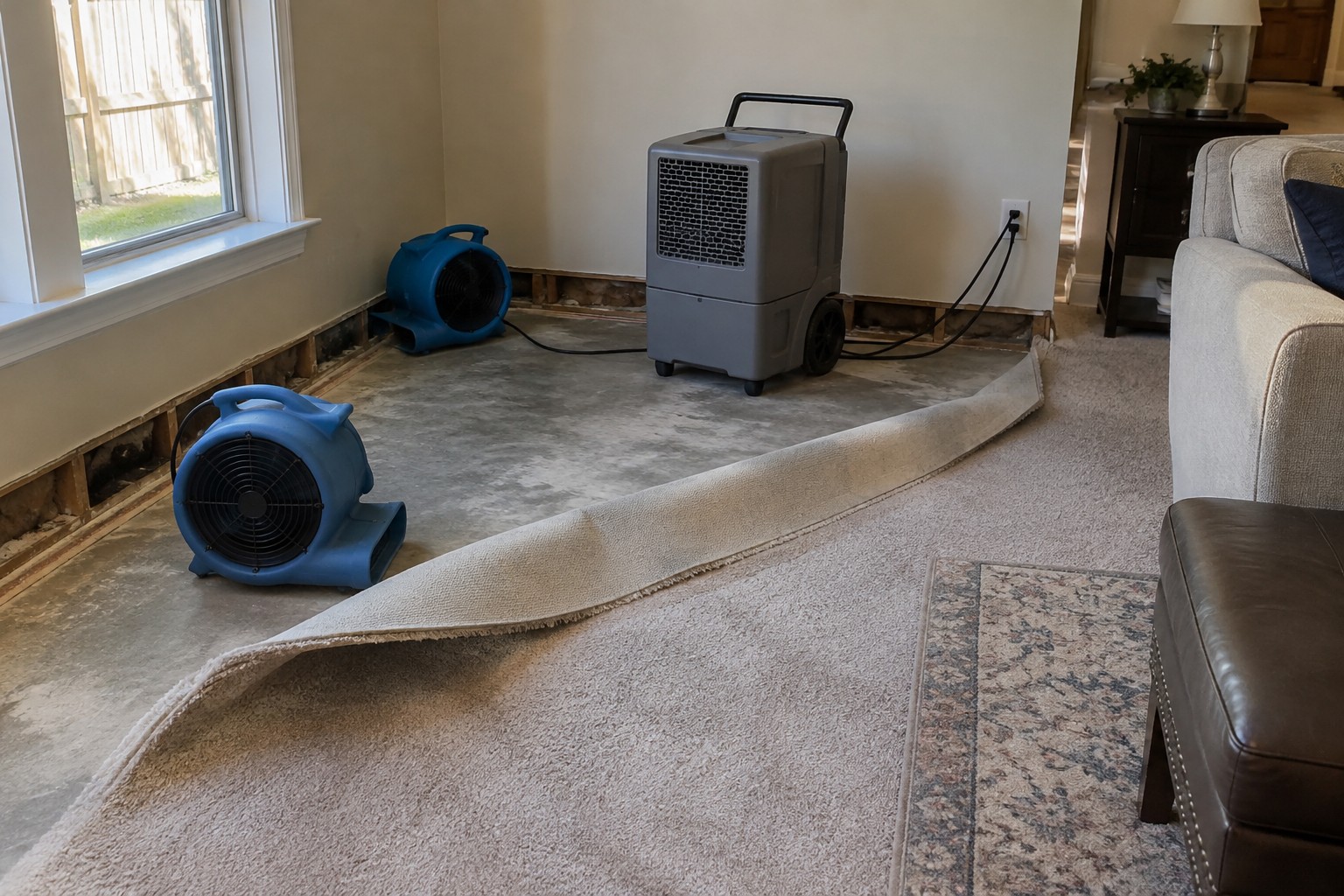
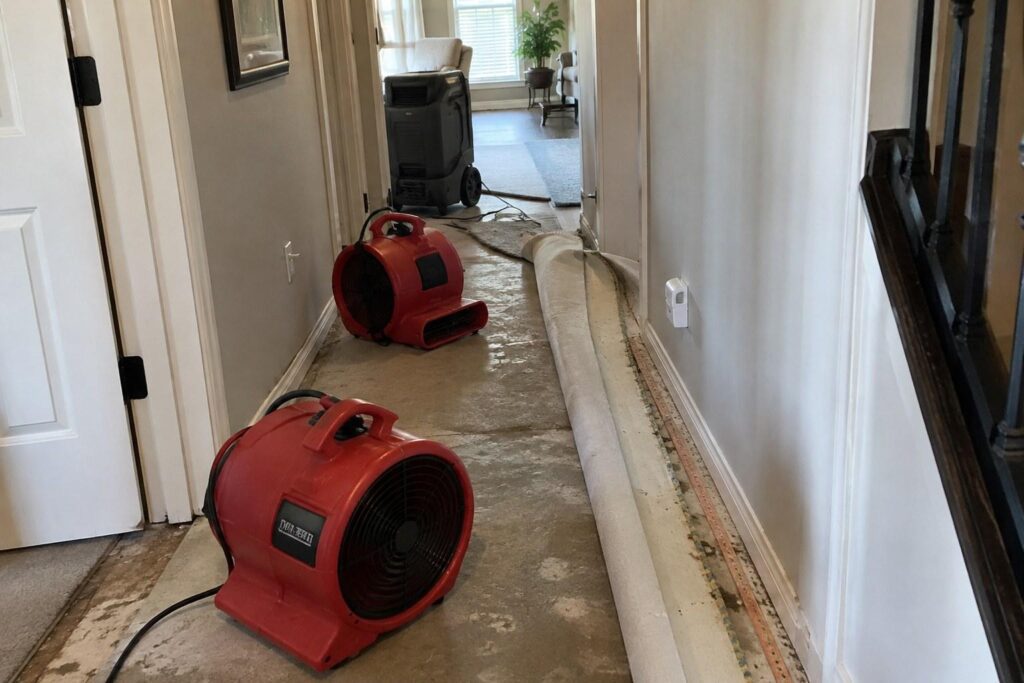
Professional drying uses equipment such as truck-mounted extraction, submersible pumps for standing water, industrial air movers and refrigerant dehumidifiers. The amount of equipment depends on the size of the affected area and the materials involved, and the number of days it runs depends on how quickly readings return to normal.
Regent Restoration’s insurance page notes that drying usually takes around 3 to 5 days, though the timeline depends on how much water entered the building, the materials affected and how long the water was present. Moisture is monitored during the job, and equipment comes out when readings confirm the structure is dry, not on a fixed calendar date.
This is one area where a lower number is not always a better deal. Pulling equipment before materials are truly dry can leave moisture trapped behind new paint or flooring, which can lead to odors, mold or failed finishes later. Daily readings protect both your home and the value of what you are paying for.
Factor 6: Repairs and Reconstruction
Mitigation stops the damage. Repairs put the home back together. Many homeowners are surprised to learn these are separate stages with separate line items, so it helps to know what each involves.
Mitigation typically covers water extraction, removal of unsalvageable materials, cleaning and antimicrobial application where appropriate, and structural drying with monitoring. Repairs can include replacing drywall and insulation, texture and paint, baseboards and trim, flooring and cabinet work. The repair scope depends on what had to be removed and what was damaged beyond saving.
Regent Restoration can handle water extraction, structural drying and restoration repairs as one recovery plan, which means one team tracks the job from the first moisture reading to the final repair. The damage assessment determines which services your property actually needs.
Factor 7: Contents and Belongings
Furniture, rugs, boxes in a closet and items stored on the floor of a garage all add scope. Some belongings can be cleaned and dried on site, some need to be moved out of the way so the structure can dry, and some may not be salvageable. Contents protection and recovery are their own part of the job, and they should be listed clearly so you know what was handled and how.
Before any belongings are discarded, photograph them and keep a simple list. That record matters for your insurance conversation, and it helps you remember what was affected once the house is back to normal.
Factor 8: Access and the Source of the Leak
Water that has collected under a slab, inside a wall shared with a bathroom or beneath built-in cabinetry takes more work to reach than water on an open floor. Access needs can add labor and repair scope.
The source repair is also separate. A licensed plumber or the appropriate trade fixes the failed pipe, fitting, water heater or appliance connection. The restoration company handles the water damage left behind. Keep those invoices separate, since your insurer may review the source repair and the resulting damage differently. Our guide on the crucial next step after the plumber leaves explains why that handoff matters.
What a Clear Water Damage Estimate Should Include
A good estimate does more than show a total. It tells you what is being done, where and why. When you review one, look for:
- The affected rooms and areas, with the boundaries supported by moisture readings.
- The water category and the reason it was assigned.
- Mitigation line items, such as extraction, material removal, cleaning and drying equipment, listed separately from repairs.
- Materials to be removed, with a short explanation for each, and materials to be dried in place.
- Photos of the damage before work begins.
- How drying progress will be monitored and documented.
- A separate repair scope, or a note that repairs will be estimated once drying is complete and the full extent is known.
If an estimate is a single number with no explanation, ask for the detail. A restoration company that took moisture readings should be able to show you how they shaped the scope.
How Homeowners Insurance Fits Into the Cost

For many Lewisville homeowners, the out-of-pocket question matters more than the total. The Texas Department of Insurance explains that most homeowner policies cover sudden and accidental water damage, such as a burst pipe, while water damage from gradual leaks or seepage, and flooding from rising water, are commonly excluded or require separate coverage. Your policy wording, deductible, limits and the cause of the loss all shape what your insurer pays.
Regent Restoration does not decide coverage, and we are not public adjusters. What we can do is document the damage and the work with photos, moisture readings and scope details, and provide that information for your claim. Regent Restoration can typically bill your insurance company directly, and our insurance claim support page explains how we help you organize restoration documentation.
A few practical points help keep the financial side clear:
- Report the loss to your insurer promptly and ask what documentation it needs.
- Know your deductible. It applies regardless of how the estimate is written.
- Talk with your insurer before permanent repairs, even though mitigation should not wait.
- Keep every estimate, invoice, photo and drying record in one place.
- If a payment does not cover the work needed, ask for an explanation in writing and provide supporting documentation.
The TDI guide to getting your insurance claim paid explains Texas claim deadlines and what to do if you disagree. For a room-by-room preparation checklist, read what to document before the insurance adjuster arrives after water damage.
Ways to Keep Water Damage Restoration Cost Down
You cannot control what failed, but you can influence how much damage it causes. These steps protect both your home and your budget:
- Stop the water safely. Know where your main shutoff valve is before you need it. Shut it off only if you can reach it without walking through water near electrical outlets or appliances.
- Call for help fast. The first day matters most. Regent Restoration’s emergency line, (214) 731-4624, is available 24/7.
- Move what you safely can. Lift rugs, furniture and boxes out of clean water areas to limit contents damage. Leave sewage or floodwater cleanup to professionals.
- Document before and during. Photos and video taken from a safe position make the insurance conversation easier.
- Do not rush the drying. Let moisture readings decide when the structure is dry before new drywall, paint or flooring goes in.
- Watch for slow leaks. Stains, musty odors, warped baseboards or a rising water bill can point to a hidden leak. Our list of signs of water damage Lewisville homeowners should never ignore can help you catch problems early, while they are still smaller jobs.
Why Lewisville Homes See Water Damage
Water damage is one of the most common property emergencies Lewisville homeowners face. Winter freezes can burst pipes, appliances and water heaters fail without warning, storms and hail can open roofs to leaks, and North Texas clay soils can shift foundations and stress plumbing lines. Our article on the most common causes of burst pipes in Lewisville homes is a good read before the next cold snap.
Because the causes are so varied, the restoration plan needs to be built around your specific loss. A frozen pipe in an exterior wall, a water heater failure in a garage and a roof leak into an attic each call for a different scope, and each leads to a different estimate.
Frequently Asked Questions
How much does water damage restoration cost in Lewisville?
It depends on the water category, the materials affected, how far moisture spread, how quickly drying started and what repairs are needed. Because those factors vary so much, the most accurate number comes from an on-site inspection with moisture readings. Regent Restoration’s initial inspection is free, so you can get a real scope before committing.
Is water mitigation priced separately from repairs?
Usually, yes. Mitigation covers extraction, removal of unsalvageable materials, cleaning and structural drying. Repairs cover rebuilding, such as drywall, paint, flooring and trim. Seeing them separately helps you understand the estimate and helps your insurer review the work. Regent Restoration can handle both stages in one recovery plan.
Will homeowners insurance pay for water damage restoration?
Many policies cover sudden and accidental water damage, such as a burst pipe, while gradual leaks and flooding are commonly excluded. Your insurer applies your policy to the cause of the loss, along with your deductible and limits. Regent Restoration documents the damage and work, and your insurer determines coverage.
How long does water damage drying take?
Drying usually takes around 3 to 5 days, depending on how much water entered the building, which materials were affected and how long the water was present. Equipment stays in place until moisture readings confirm the structure is dry. Removing it too early can trap moisture behind new finishes and cause problems later.
Can I save money by drying the house myself?
You can safely mop up small amounts of clean water and move belongings out of the way. Household fans, however, rarely dry wall cavities, subfloors or areas under cabinets. Hidden moisture can lead to mold and larger repairs, so a professional moisture check is worth it even when the visible water is gone.
Why did my estimate include removing drywall that looks fine?
Drywall wicks water upward, and insulation inside the wall can stay saturated even when the surface looks dry. Moisture readings show where water traveled. Removing a lower section of drywall lets the cavity dry properly and prevents trapped moisture. Ask to see the readings that support any removal.
Get a Clear Water Damage Estimate in Lewisville
You should not have to guess what water damage will cost or why. Regent Restoration provides 24/7 water removal, moisture detection and mapping, structural drying, contents protection and repairs for Lewisville homes, with more than 15 years of restoration experience across Dallas-Fort Worth. We explain the affected areas, drying progress and proposed repairs so you know what is happening next, and we document the work for your insurance discussions.
Call (214) 731-4624 or contact Regent Restoration to schedule your free inspection. You can also visit Regent Restoration at 824 Office Park Cir #100, Lewisville, TX 75057.