

Water damage doesn’t always announce itself. A faint musty odor, a soft spot in the floor, a ceiling stain you’ve been meaning to check, these are the signs of water damage Lewisville homeowners tend to dismiss until the problem is already expensive. The expansive clay soil under Denton County shifts every season, and homes across Lewisville take the stress. We’ve been responding to that damage since 2009, and we’re available around the clock, every day of the year. If something looks off in your home, this guide will help you read it clearly.
Spotted something in your home and not sure what you’re looking at? Our team responds within 60 minutes.
Key Takeaways
- Peeling paint, bubbling drywall, and warped flooring are common early signs of water damage that most homeowners overlook.
- A musty odor in a room with no obvious source often means mold is already growing behind a wall or under a floor.
- Lewisville homes on original copper or galvanized supply lines face a higher risk of slow, hidden slab leaks.
- Mold can begin growing within 24 to 48 hours of water exposure, so acting fast on any warning sign matters.
- Pulling three months of water bill history from the City of Lewisville Utilities can help confirm a hidden leak before visible damage appears.
It’s a Wednesday evening in Castle Hills. You’re walking down the hallway and notice the floor feels slightly soft under your foot. You glance up and see a faint yellowish ring on the ceiling near the bathroom. It’s small. Easy to dismiss. But that small discoloration is often the first visible sign of a water problem that has already been growing inside your walls for days, maybe weeks.

According to the Insurance Information Institute, water and freezing damage is one of the most common and costly homeowners insurance claims in Texas. The gap between a $2,000 repair and a $20,000 remediation job is often just a few days of delay. Moisture spreads fast, and what starts as a stained ceiling can become a full mold remediation project if you wait too long to act.
We are Regent Restoration, IICRC certified and handling water damage restoration in Lewisville since 2009. Our crew answers calls day and night, every day of the year. This article covers 9 specific signs you should never ignore, from visible stains to structural red flags most homeowners mistake for normal wear. The first three you can see, the next two you can smell and feel, and the last four hide in your bills, plumbing, and structure.
Signs of Water Damage You Can See: Walls, Ceilings, and Floors
Water damage leaves a trail. You just have to know what you’re looking at. These first three signs of water damage in walls, ceilings, and floors are the ones homeowners most often dismiss or delay acting on. That delay is almost always where the real money gets lost.
What Do Brown or Yellow Ceiling Stains Mean?
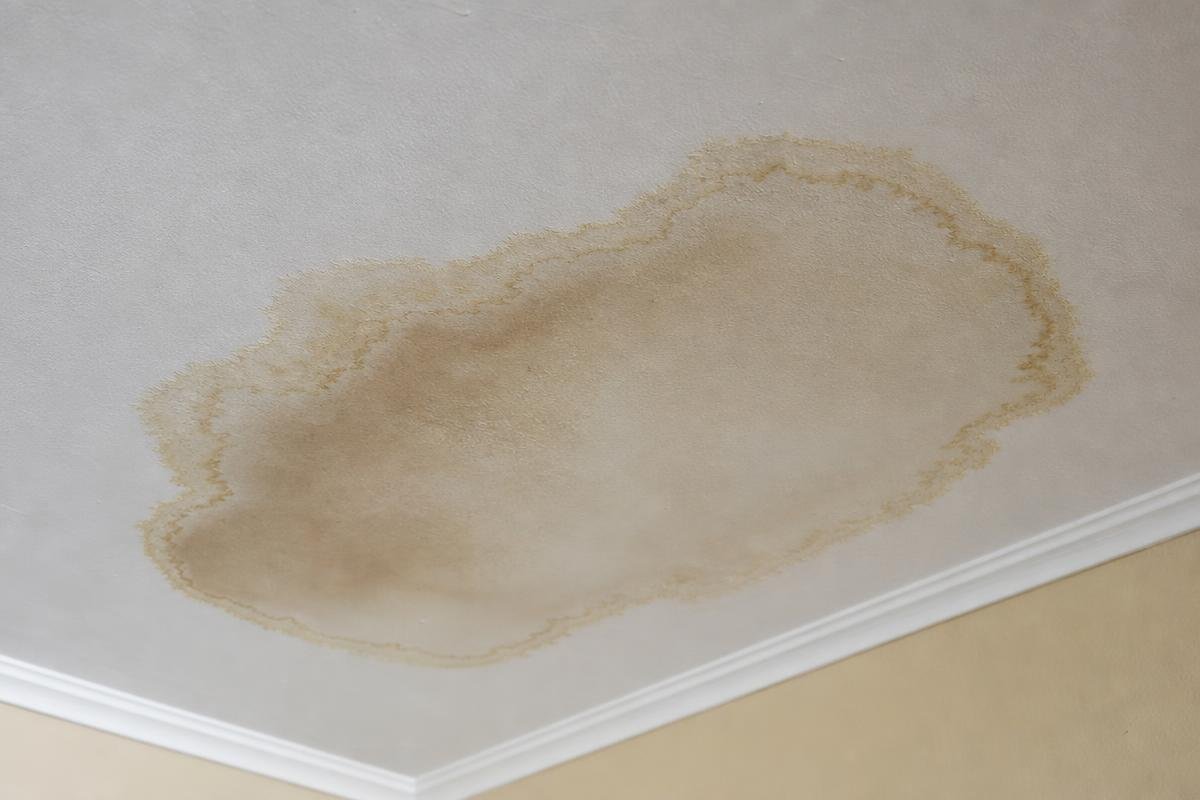
Brown or yellow ceiling stains mean water has already traveled through insulation or framing before it reached the drywall surface you can see. The darker outer edge is a mineral deposit left behind as the water dried, and it tells you this has happened more than once.
A dinner-plate-sized stain is not a small problem. Homes in the 75057 zip code, particularly older builds in Old Town, often run on original copper or galvanized supply lines. Those aging pipes are a frequent source of slow, hidden leaks that stain ceilings for months before anyone notices. Our post on ceiling water stains from plumbing leaks covers exactly what to do next.
Why Is Paint Peeling or Wallpaper Bubbling?
Paint peels and wallpaper bubbles because moisture behind the wall surface breaks the bond between the finish and the drywall underneath. You’ll see it as bubbling, blistering, or paint that peels away in sheets. The location tells you a lot about the source.
Bubbling on an exterior wall usually points to roof or flashing failure, especially after the heavy spring storms that roll through the area. Bubbling near a bathroom or kitchen on an interior wall almost always means a slow supply line or drain leak is feeding moisture from behind. If you’re seeing this in a two-story home, it may be coming from an upstairs bathroom or a water heater above. Our restoration team can trace the source before you repaint over a problem that will come right back.
What Causes Warped, Buckled, or Soft Flooring?
Warped, buckled, or soft flooring is caused by water sitting underneath for an extended period. Hardwood and laminate floors start absorbing moisture and buckling within 24 to 48 hours of exposure. If you notice boards lifting at the edges or a soft, spongy feeling underfoot in a tile or vinyl area, the subfloor beneath is likely saturated.
In neighborhoods built on slab foundations, soft spots in flooring are a water damage warning sign that often points to an undetected slab leak pushing moisture up from below. That is a different repair path than a surface spill, and it requires moisture mapping to confirm. See our full guide to wood floor water damage repair for what that process looks like.
Soft spots in your floor? We run same-day moisture mapping to find the source before you tear anything up.
Signs 4-5: What You Can Smell and Feel
Why Does One Room Have a Musty Odor That Won’t Go Away?
A musty odor that won’t go away usually means hidden mold is already growing nearby. Your nose is often the first detector. That stale, earthy smell in a closet, under a bathroom vanity, or in a finished room over the garage is not just “old house.” It is microbial volatile organic compounds, or MVOCs, the gases released by mold and mildew as they break down wet organic material like drywall paper, wood framing, and carpet backing.

Mold can begin producing that odor within 24 to 48 hours of a moisture event, sometimes before any visible growth appears. So if your home smells musty and everything looks dry, trust your instincts. Something is wet somewhere. Small leaks that seem minor can lead to major mold problems faster than most homeowners expect. If the smell persists, professional mold remediation in Lewisville starts with moisture mapping, not just surface treatment.
Sign 5: Unusual Humidity, Condensation, or a Clammy Feel
Walk through your home on a normal afternoon. If surfaces feel clammy, windows are fogging up from the inside, or the air feels heavy despite your AC running, that is a data point worth taking seriously. A water intrusion event raises indoor relative humidity, and your body registers it before any meter does.
This is especially relevant in Flower Mound and Corinth, where two-story homes with upstairs bathrooms or water heaters are common. A slow leak inside a wall raises humidity on the floor below before any stain appears. In local summers from May through October, AC systems already run hard. A condensate drain line clog can overflow silently into ceiling cavities or wall framing, spiking indoor humidity with no obvious source. If your AC is keeping up on temperature but the air still feels wrong, that is a hidden water leak sign worth investigating immediately.
Signs 6-7: What Your Utility Bills and Plumbing Tell You
What Does a Spike in Your Water Bill Mean?
A spike in your water bill usually means a hidden leak, not a dripping faucet. Pull your last three months of statements from City of Lewisville Utilities and lay them side by side. If your usage jumped 20% or more with no change in household habits, that number is telling you something.
Slab leaks are a serious concern in homes built on aging metal supply lines. Those lines run directly through the concrete slab, and when they fail, they can release hundreds of gallons per day into the soil before a single visible sign appears inside your home. The clay soil in Denton County absorbs that water quietly, which is exactly why the bill spike is often the first warning you get. If you suspect a slab leak, our guide on what to do after a burst pipe walks you through the immediate steps.
Sign 7: The Sound of Running Water When Everything Is Off
Stand in a quiet room and listen. A faint hissing or trickling behind a wall, under a floor, or near an appliance when every fixture is off is a hidden water leak sign you should take seriously. It is easy to dismiss as settling or HVAC noise. It usually is not.
Do this test right now: shut off every water-using appliance and fixture in the house, then watch your water meter for 15 minutes without touching anything. If the dial moves at all, water is escaping somewhere. In Lakeland Village and along the border areas near The Colony, two-story homes with upstairs water heaters are a documented source of this problem. A slow heater leak drips through the subfloor for weeks before it shows up as a ceiling stain below. For full-scale water intrusion from any source, our restoration crew responds around the clock, every day of the year.
Signs 8-9: Structural and Secondary Damage You Might Dismiss
These last two signs are the ones homeowners rationalize away most often. A ceiling that feels slightly soft. A small dark spot on the grout. Easy to explain away. Hard to undo once the damage compounds. These are not cosmetic issues, and treating them like cosmetic issues is exactly how a manageable repair turns into a major rebuild.
Sign 8: Sagging Ceilings, Soft Baseboards, and Crumbling Trim
A ceiling that sags or feels soft is holding pooled water above it. The drywall is saturated. By the time you can feel it from below, the insulation above is likely soaked through and the framing may already be affected. In two-story homes throughout Lewisville proper and Vista Ridge, this pattern shows up regularly after an upstairs bathroom leak or water heater failure. The first floor takes the damage while the source sits quietly above it.
Baseboards that crumble, feel spongy, or show dark discoloration along the bottom edge are telling you something different. Water is wicking up from a wet subfloor or slab. That is a signs of water damage in walls situation that starts at ground level and works upward. Read our guide on what to do after the plumber fixes the source, because stopping the leak is only step one.
Is a Small Patch of Visible Mold a Big Deal?
Yes, even a quarter-sized patch of mold under a sink or along a grout line is a real problem. It means moisture has been present long enough for spores to colonize. What you see on the surface is almost always a fraction of what is growing inside the wall cavity or beneath the flooring. That is one of the clearest water damage warning signs there is, and it rarely travels alone.
Bleaching the surface does not fix it. It removes the visible growth and leaves the colony behind. The only real answer is finding the moisture source and removing the affected material. Our team handles this through professional mold remediation that addresses both what you can see and what you cannot.
Soft ceiling? Mold spot you keep meaning to deal with? Call us at (214) 731-4624 before it gets worse.
Why Are Lewisville Homes Especially Vulnerable to Hidden Water Damage?
Lewisville homes are especially vulnerable because the local soil, weather patterns, and housing stock create conditions that make water damage more likely and harder to catch early. If you understand why, you’ll know where to look first.

Slab Foundations, Clay Soil, and Aging Plumbing
The soil under most homes in this area is expansive clay, sometimes called “black gumbo” by local contractors. It absorbs water and swells in wet seasons, then shrinks hard when summer heat sets in. That constant movement stresses your slab foundation and the supply and drain lines running through or beneath it.
Homes in the 75057 zip code, particularly in Old Town, were built before 1990 and many still run on original metal plumbing. Those pipes are past their expected lifespan. A slab leak in one of these homes can run for weeks before you notice a warm spot on the floor or a bill spike. Our post on 9 warning signs of foundation problems Lewisville homeowners ignore covers what to watch for before a plumbing failure becomes a structural one. You can also read more about how clay soil affects foundation moisture in North Texas homes and why it matters for your pipes.
Local Weather, Lake Lewisville, and AC Drain Lines
The area averages over 40 inches of rain per year, and Lake Lewisville to the north creates localized weather patterns that can push spring and fall storm totals even higher. Hail in spring punches through shingles and opens entry points for water long before you see a stain inside. If your roof took hits last season, roof repair in Lewisville should be on your list before the next storm cycle.
AC systems here run hard from May through October. A clogged condensate drain line overflows silently into ceiling framing or wall cavities. By the time you notice bubbling paint or a musty odor, the moisture has usually been sitting there for days. That’s exactly the kind of slow, hidden damage we see most often in two-story builds, including in nearby water damage restoration in Corinth.
What Should You Do the Moment You Spot a Warning Sign?
The moment you spot a warning sign, act fast, because water keeps moving through walls, subfloor, and insulation long after the visible damage appears. What you do in the next 30 minutes matters more than most homeowners realize. Act in this order.
Step 1: Stop the Water at the Source
Find the fixture shutoff first. Every toilet and sink has one. If you cannot identify the source, go straight to the main shutoff for the house. Do not run the dishwasher, washing machine, or irrigation system until you know exactly where the water is coming from.
Step 2: Document Everything Before You Touch It
Take photos and video of every visible sign before you move furniture, pull up carpet, or wipe anything down. Walk the entire affected area. Capture stains, bubbling paint, warped flooring, and standing water from multiple angles. This documentation is what your insurance claim is built on. Read how Regent Restoration works with your insurance so you know what your adjuster will actually need.
Step 3: Call a Restoration Team, Not Just a Plumber
A plumber fixes the source. That is their job, and they do it well. But they do not dry the structure, treat mold, or restore damaged materials. Calling only a plumber and assuming the job is done is one of the most common mistakes we see on service calls across Lewisville. Read more about the critical step most homeowners skip after the plumber leaves.
Our IICRC-certified team responds within 60 minutes, day and night, every day of the year. If the problem involves a sewage backup, do not wait. That requires immediate professional response. Contact us directly for sewage cleanup in Lewisville.
Not sure how serious it is? Get a straight answer from a certified tech at (214) 731-4624 before the damage spreads.
Frequently Asked Questions
How quickly does water damage get serious?
Faster than most homeowners expect. Drywall and wood begin absorbing water within hours. Without professional drying equipment, warped framing and a compromised subfloor can develop within days. The clock starts the moment moisture enters your home.
Can I have water damage without seeing any visible signs?
Yes. A musty odor or an unexplained spike in your water bill can signal hidden moisture even when your walls look perfectly fine. Our team uses moisture meters and thermal imaging cameras on every inspection to detect elevated moisture behind drywall without cutting a single hole.
How fast can mold grow after water damage?
Mold spores are already present in every home. Give them moisture and an organic food source, such as drywall paper, wood framing, or carpet backing, and active colonies can establish within 24 to 48 hours. Fast drying is the single best way to lower that risk. If mold is already present, our mold remediation lewisville team handles it from containment through clearance testing.
Does homeowners insurance cover water damage in Texas?
Most standard Texas policies cover sudden and accidental damage, think burst pipe, appliance failure, or a storm-driven roof leak. Gradual leaks and outside flooding are typically excluded. Read the fine print carefully. For a plain-English breakdown of what your policy actually owes you, see what your Lewisville homeowners policy actually covers.
What is a slab leak and how do I know if I have one?
A slab leak is a break in a supply or drain line running through or beneath your concrete foundation. Warning signs include a sudden water bill spike, warm spots on the floor, the sound of running water with every fixture off, and soft or damp flooring. Homes in the 75057 zip code on original copper or galvanized supply lines carry a higher risk than newer construction in Flower Mound or Corinth.
Is a small amount of water damage really a big deal?
A dinner-plate-sized ceiling stain means water has already traveled through insulation and framing before you saw it. Industrial air movers and dehumidifiers remove moisture that towels and fans simply cannot reach. Small visible damage almost always points to a larger hidden problem.
What does water damage actually smell like?
It is a musty, earthy odor, often described as old books or a damp basement. That smell comes from microbial volatile organic compounds produced by mold and mildew growing on wet materials. If you smell it but see nothing, treat it as a hidden moisture problem until an inspection proves otherwise.
You spotted something. Trust that instinct. Call our team at (214) 731-4624 right now. We respond within 60 minutes, day and night, every day of the year. Our IICRC-certified technicians will inspect your home, identify the moisture source, and walk you through exactly what needs to happen next. No pressure. No guessing. Just answers. We are located at 824 Office Park Circle #100, Lewisville, TX 75057 and serve homeowners across the entire DFW area.
Ready to Get Started with Regent Restoration?
Call (214) 731-4624 to speak with our team directly. We’re ready to answer your questions, walk you through your options, and help you find the right solution for your needs. Whether you’re just starting to plan or ready to move forward, we’ll make the process simple and stress-free.
Reach out today and let’s talk about how we can help.