
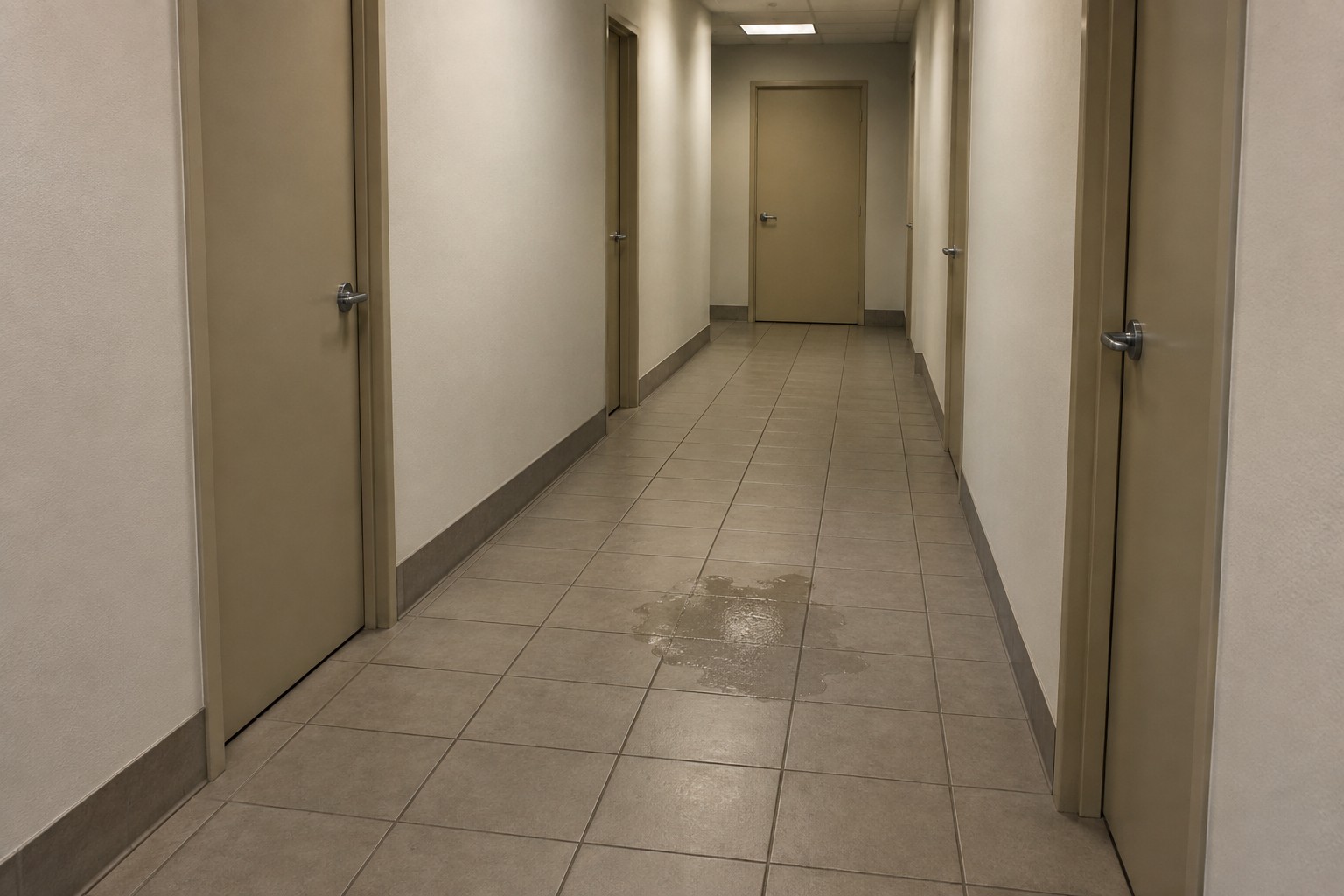
When water spreads across an office suite, retail floor, or warehouse aisle, the first hour often turns on simple questions. Who can unlock the space? Who can approve work? Is it safe to walk in? Emergency water extraction is only one part of the answer. The rest is coordination between tenants, property managers, owners, qualified trades, and the restoration team.
This guide walks through how a commercial water response usually comes together, from the first call to the point where responsible parties decide the space is ready to use again. It is written for property managers, building owners, and tenants in Lewisville and nearby areas who want a clear plan before they need one.
Key Takeaways
- Decide ahead of time who can grant access and approve emergency work for each space in the building.
- Keep people out of standing water and away from electrical equipment until the area is confirmed safe.
- The water source should be controlled safely and repaired by the appropriate qualified trade; electrical hazards need separate professional attention.
- Extraction, structural drying, and moisture verification work as stages, and drying is checked with readings rather than appearance.
- Contents moves, documentation, and reopening decisions should involve the owner and other responsible parties at each step.
What Emergency Water Extraction Means for a Commercial Property
Emergency water extraction is the removal of standing and absorbed water from a building as soon as it is safe to begin. In a commercial setting, that might mean pulling water out of carpet tiles in an office, clearing a back-of-house area in a restaurant, or removing water from a concrete slab in a warehouse.
Extraction is the first physical step, not the whole job. Water that has soaked into drywall, flooring, cabinets, and wall cavities stays behind after the visible water is gone. That is why extraction is usually followed by structural drying, dehumidification, and moisture checks. You can read more about the full process on our water damage restoration page.
Commercial properties add a layer that homes usually do not have: more people with a stake in the outcome. A single leak can touch several tenants, a property management company, an owner, and sometimes an association or lender. Each group needs to know what is happening and who is deciding what. The smoother that coordination is, the sooner the actual work can begin.
Set Up Access and Authority Before Anyone Needs It
Many commercial water calls stall at the door. The restoration crew arrives, but nobody on site has a key to the affected suite, or the person who answered the phone cannot approve work. Sorting this out ahead of time saves real frustration.
Who Should Be on the Contact List
A useful emergency contact list for a commercial property usually includes:
- The property manager and a backup manager who can be reached after hours.
- The building owner or an owner’s representative with authority to approve emergency work.
- A primary and secondary contact for each tenant, including after-hours numbers.
- Maintenance staff or the building engineer who knows where shutoff valves and panels are.
- Your preferred plumber, electrician, and restoration company.
Clarify Who Can Approve What
Leases and management agreements often spell out who is responsible for which parts of a building. A tenant may control their interior finishes and equipment, while the landlord controls the roof, shared plumbing, and common areas. Read those documents before an emergency, not during one. Write down who can sign a work authorization for common areas, who can approve work inside a tenant space, and who should be told even if they are not approving anything.
Keep the list where people can find it: printed in the maintenance room, saved in the management software, and shared with tenant contacts. A list that only lives in one person’s inbox does not help when that person is on vacation.
Make the Space Safe Before Extraction Starts
Water and electricity are a dangerous combination, and commercial spaces often have more powered equipment than a home: servers, refrigeration, kitchen gear, point-of-sale stations, and machinery. Safety comes before speed.
Simple Rules for the First Few Minutes
- Do not walk into standing water if outlets, cords, power strips, or equipment are submerged or near the water.
- Do not plug in, unplug, or operate electrical equipment while standing in or near water.
- If power needs to be shut off and the panel is in a dry, safe location, let trained staff or an electrician handle it.
- Watch for slippery floors, sagging ceilings, and wet ceiling tiles that could fall.
- Move employees and customers away from the affected area and mark it off.
Zoning the Affected Area
Once people are clear, it helps to think of the building in zones: the wet area, the area around it that could be affected, and the dry areas where business can continue. Tape, cones, or closed doors can keep foot traffic from tracking water into dry spaces. When the restoration team arrives, they will assess the area and may adjust those zones based on what they find. If the water came from a source that might be contaminated, such as a sewer backup, keep everyone out and let professionals evaluate it.
Stop the Source With the Right Qualified Trade
Extraction does little good if water keeps coming. Stopping the source is the first priority, and fixing it is a job for the right trade.
For many leaks, the first step is closing the nearest shutoff valve or the building’s main water valve. This is where the contact list pays off again: someone needs to know where those valves are. After that, the repair belongs to a qualified professional. A licensed plumber handles broken supply lines, failed fittings, and drain problems. An electrician evaluates wet wiring, panels, and equipment. A roofer handles roof leaks. Fire sprinkler issues should go to a fire protection contractor, since those systems have their own requirements.
Regent Restoration focuses on removing water, drying the structure, and restoring the damaged areas. We work alongside the trades that fix the source, and coordinating with them keeps the drying plan in step with the repair schedule. If a pipe repair requires opening a wall, for example, the drying approach may change once that wall is open.
How Professionals Choose Extraction Equipment
Property managers sometimes ask what kind of equipment will be used or how many machines will be needed. The honest answer is that it depends on what the technicians find on site.
Equipment choices are based on the amount of water, the materials that are wet, the size and layout of the space, and how the building’s air moves. Carpet over pad, carpet tile glued to concrete, wood flooring, and sealed vinyl all behave differently. A tall open warehouse dries differently than a row of small offices with closed doors. A trained professional looks at those factors and selects extraction tools, air movers, and dehumidifiers to match.
That is why it is wise to be cautious about anyone who quotes an exact equipment list before seeing the space. The plan should come from an on-site assessment, and it may change as drying progresses and readings come in. A good restoration team explains its choices in plain terms and adjusts them when conditions change.
Staged Extraction, Structural Drying, and Moisture Verification
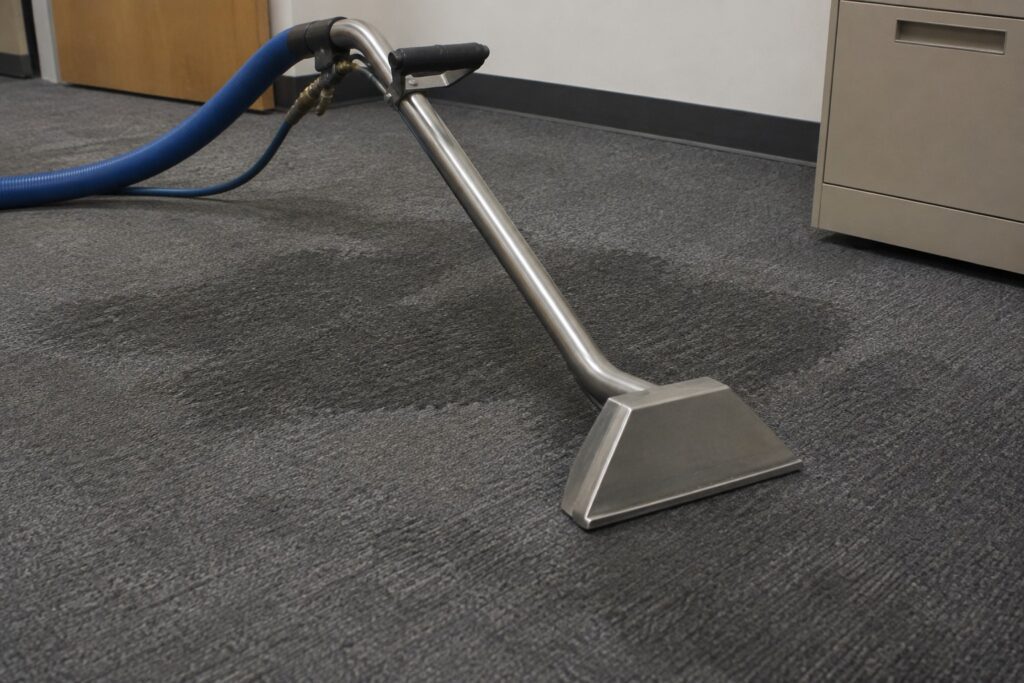
Commercial water cleanup generally moves through three connected stages. Understanding them helps tenants and managers know what to expect and why the job is not finished the moment the floor looks dry.
Stage One: Extraction
The crew removes standing water and as much absorbed water as practical from flooring and other surfaces. Removing water early reduces the amount left to evaporate during drying. Materials that cannot be dried in place, such as some saturated pad or badly damaged drywall, may need to be removed, and the team should explain why before doing so.
Stage Two: Structural Drying and Dehumidification
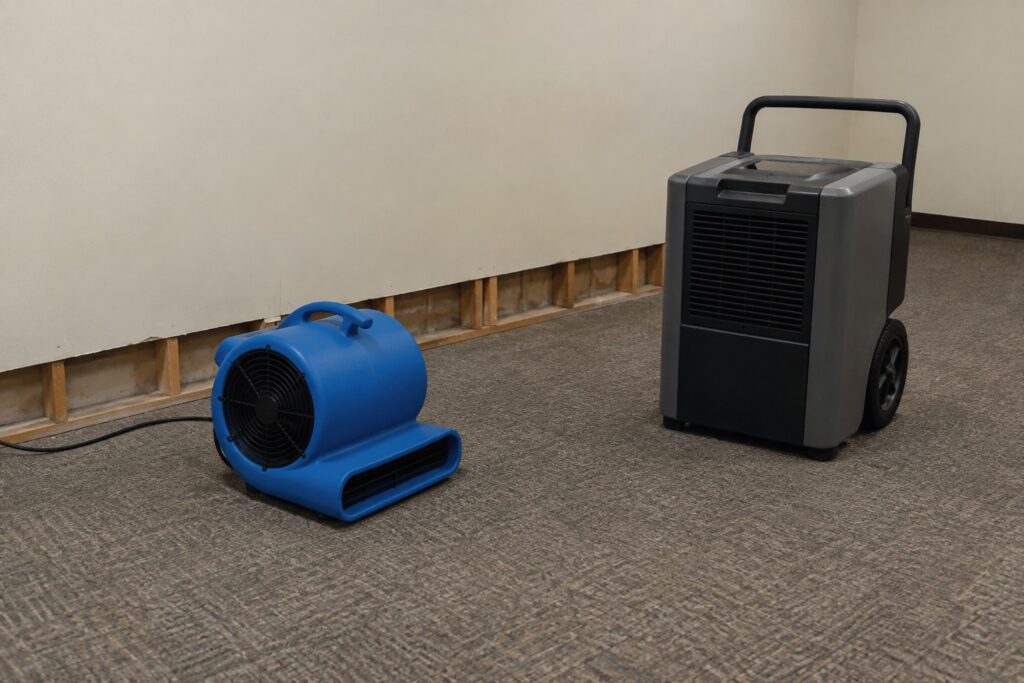
Next, air movers and dehumidifiers work together to pull moisture out of building materials and out of the air. Structural drying targets the building itself, including subfloors, wall framing, and the lower parts of walls that wicked up water. In some cases, small openings or baseboard removal help air reach wet cavities.
Stage Three: Moisture Detection and Verification
Throughout drying, technicians use moisture detection tools to map where water traveled and to track progress. Water often spreads farther than it appears, under walls into neighboring suites or along a slab. Moisture mapping helps find those hidden areas. Readings are taken over time and compared to dry reference areas in the same building. Drying is considered complete based on those readings, not on how a surface looks or feels.
After drying is confirmed, restoration and repairs can begin, from replacing drywall and baseboards to reinstalling flooring. Our water damage restoration service in Lewisville, TX covers each of these steps.
Moving Contents With the Owner’s Consent
Commercial spaces are full of things that matter to the business: inventory, files, furniture, equipment, and displays. Getting them out of harm’s way can protect them and also open up the floor for extraction and drying.
Moving contents should always happen with the owner’s consent. In a multi-tenant building, that means the tenant who owns the items, not just the property manager. Before anything is moved, it helps to agree on:
- Which items should be moved, and which should stay in place.
- Where items will go, whether to a dry area on site or another location.
- How items will be labeled and listed so they can be tracked.
- Who needs to be present for sensitive items like records, equipment, or high-value stock.
Contents recovery is part of the work Regent Restoration provides. Our team can help sort items that are dry, items that may be cleaned and dried, and items that appear damaged. Final decisions about what to keep, discard, or replace belong to the owner of those items, often in consultation with their insurer.
Documentation That Supports Clear Decisions
Good records make every later decision easier, whether that decision is about repairs, reopening, or an insurance claim. Documentation also helps keep several stakeholders on the same page.
Useful documentation for a commercial water loss usually includes photos of the affected areas before and during work, moisture readings over time, a record of materials removed, a list of contents that were moved, and notes on what each trade did. Property managers can add their own records too: when the problem was found, who was called, and when the water was shut off.
Regent Restoration provides documentation of our work and can coordinate with your insurance company by sharing that information when asked. Our restoration role is to document and explain the work, not determine policy coverage. Coverage decisions belong to the insurer and can vary by the cause of the loss, the policy terms, and exclusions. For more on how we work with carriers, see our insurance page.
Reopening Decisions Belong to Qualified Responsible Parties
Everyone wants to know when the space can open again. It is a fair question, and the answer depends on several parties, not just the restoration crew.
The restoration team can report when drying readings show materials have reached their dry goals and when repairs are complete. But the decision to reopen a space to employees or the public rests with the qualified, responsible people for that building. Depending on the situation, that may include the owner, the property manager, the tenant, an electrician who has checked wet systems, a building official if permits were involved, and any other professional whose sign-off is required.
For that reason, be wary of firm promises about reopening dates made early in a job. Drying can move faster or slower than expected, and hidden moisture or damage can change the plan. A better approach is regular updates: what was done today, what the readings show, and what comes next. That gives decision makers the information they need without false certainty.
Keeping the Business Running During Water Cleanup
For many businesses, the biggest concern after a water loss is keeping operations going. A little planning can make a meaningful difference.
Practical Ways to Limit Disruption
- Use zoning to keep unaffected areas open when it is safe to do so.
- Talk with the restoration team about work scheduling, such as noisy tasks happening at times that disrupt less.
- Plan temporary workspaces, remote work, or relocated service counters if a key area is out of use.
- Keep customers informed with simple signage and updates if part of the business is closed.
- Back up important digital files regularly so a wet server room is not also a data crisis.
Drying equipment runs continuously and can be noisy, and it may need to stay in place for a period of time. Ask the team where equipment will sit, what clearances it needs, and whether it can be arranged to keep walkways and exits clear. Tenants who know what to expect tend to adapt more easily.
An October Contact-List Drill for Property Teams
October is a practical time for property teams to check their plans. Many businesses get busier toward the end of the year, with holiday schedules, year-end deadlines, and staffing changes. A short drill now means fewer surprises later.
A Simple Drill You Can Run in an Afternoon
- Call or text every after-hours contact on the list and confirm the numbers still work.
- Update tenant contacts for any suites that changed occupants or staff this year.
- Walk the building with maintenance staff and confirm everyone can find the main water shutoff and the electrical panels.
- Check that keys, access cards, and alarm codes are available to the people who would need them at night or on a weekend.
- Confirm who can approve emergency work for common areas and tenant spaces, and write it down.
- Save your plumber, electrician, and restoration company contacts in the same place as the list.
Share the updated list with tenants and note the date it was last checked. Plan to repeat the drill whenever the building’s management, ownership, or major tenants change.
Frequently Asked Questions
What Should a Property Manager Do First When Water Is Found?
Keep people out of standing water and away from electrical equipment, then stop the water at the nearest safe shutoff if possible. Next, call the contacts who can grant access and approve work, along with the right trade for the source. Once the area is safe and the source is controlled, a restoration team can begin assessing and extracting water.
Can Extraction Start Before the Leak Is Repaired?
Sometimes. If the water is shut off and the area is safe, crews may begin removing standing water while a plumber or other trade completes the repair. The drying plan may change once the repair is done, especially if walls or ceilings need to be opened. Coordinating both schedules helps avoid drying an area that gets wet again.
Who Decides Which Tenant Contents Get Moved?
The owner of the items should give consent before anything is moved. In a multi-tenant building, that is usually the tenant, not the property manager. The restoration team can recommend what to relocate and help label and track items, but final decisions about moving, keeping, or discarding belong to the owner, often alongside their insurer.
How Do You Know When a Commercial Space Is Dry?
Drying is confirmed with moisture readings, not by how surfaces look or feel. Technicians map where water spread, take readings over time, and compare them to dry areas of the same building. When affected materials reach their drying goals, repairs can begin. Surfaces can feel dry while moisture remains inside walls, subfloors, or framing.
Will My Insurance Pay for Emergency Water Extraction?
That decision belongs to your insurance company. Coverage varies by the cause of the water, your policy terms, and any exclusions. Regent Restoration can document the work and share that information with your insurer when asked, but we do not determine coverage. Review your policy and speak with your agent or carrier.
Who Decides When the Business Can Reopen?
Reopening is decided by the qualified, responsible parties for the building. That may include the owner, property manager, tenant, an electrician who checked wet systems, and any official whose sign-off is required. The restoration team reports drying results and completed repairs, which gives those decision makers the information they need to choose a safe time.
Plan Your Commercial Water Response With Regent Restoration
A commercial water loss is easier to manage when access, safety, and decision-making are sorted out before the first drop hits the floor. If you manage or own a commercial property in Lewisville and want to talk through extraction, drying, contents recovery, or documentation, Regent Restoration is ready to help. Call us at (214) 731-4624 or contact Regent Restoration online to start the conversation.