

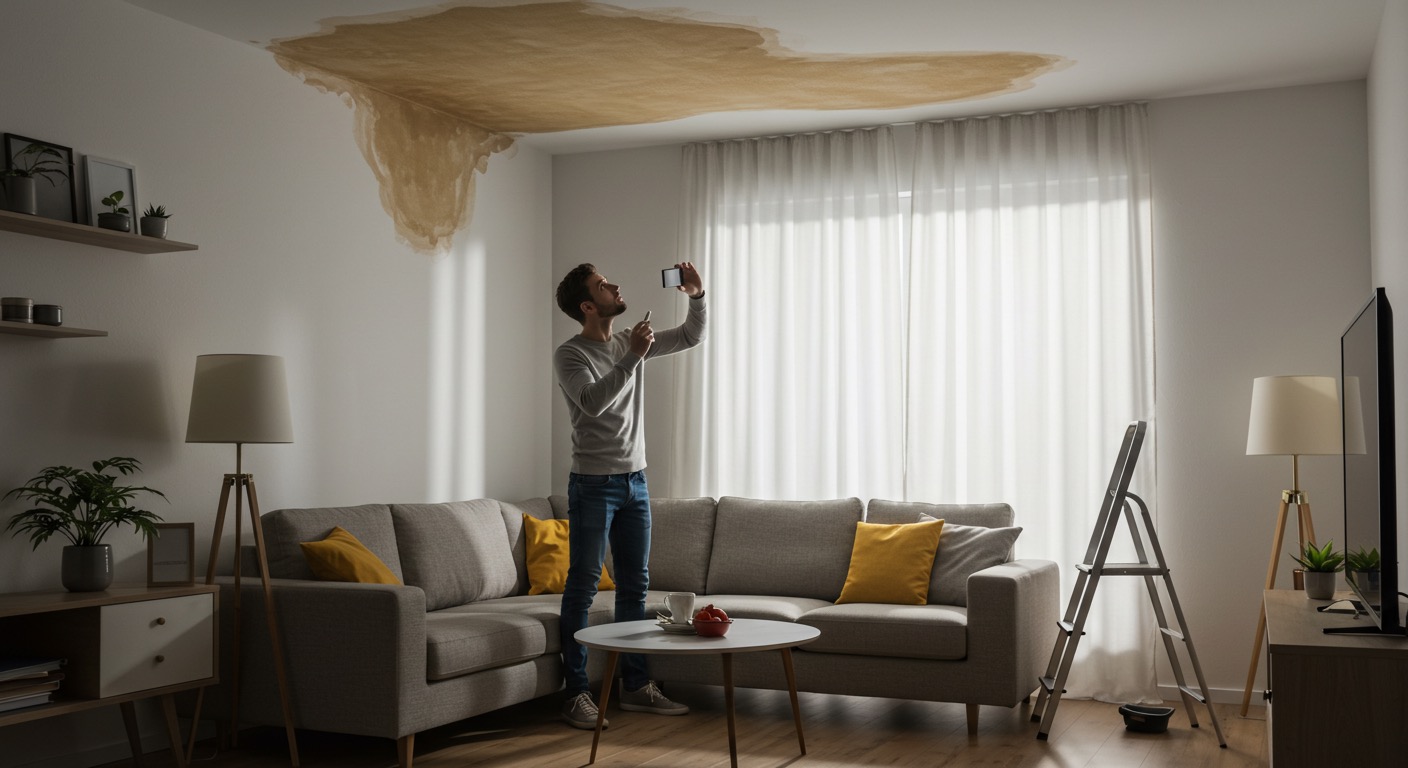
A ceiling stain can come from a plumbing leak, roof leak or air-conditioning condensate problem. The mark shows where water reached the surface, which may be some distance from its source. Before repainting, identify the cause and check whether the surrounding materials are still wet.
This guide explains what to record, who to call and what should happen between stopping the leak and repairing the ceiling.
Start with safety and stop further water if you can
- Keep people away from a sagging or bulging ceiling. Do not stand beneath it or cut into it to investigate. Arrange a professional assessment.
- Avoid wet electrical fixtures and equipment. Do not touch switches or enter standing water to reach a breaker. Ask an electrician or emergency service for help when electricity may be involved. The CDC’s disaster cleanup guidance explains the electrical precautions.
- Stop using a fixture that appears linked to the leak. If you know how to shut off its water supply and can reach the valve safely, do so. Otherwise, call a plumber.
- Record the damage from a safe position. Take photos of the stain and affected rooms. Note when you first saw it and whether it changes after rain, bathing or appliance use.

Clues to share with the person locating the leak
You do not need to open the ceiling to provide useful information. Tell the plumber, roofer or HVAC technician what is above the affected room and when the stain appears.
- Below a bathroom: mention any link to showering, flushing or filling the bathtub. Supply connections, drains and waterproofing need different repairs.
- Below a laundry area: describe whether water appears during a wash or drain cycle.
- Below attic equipment: mention whether the air conditioner was running and whether an overflow was noticed.
- After rain: a roof or exterior leak may be involved even when plumbing is nearby.
Stain color alone cannot establish how old a leak is or whether it has stopped. A dry-looking surface also does not confirm that insulation or framing behind it is dry.
Separate the leak repair from the damage repair
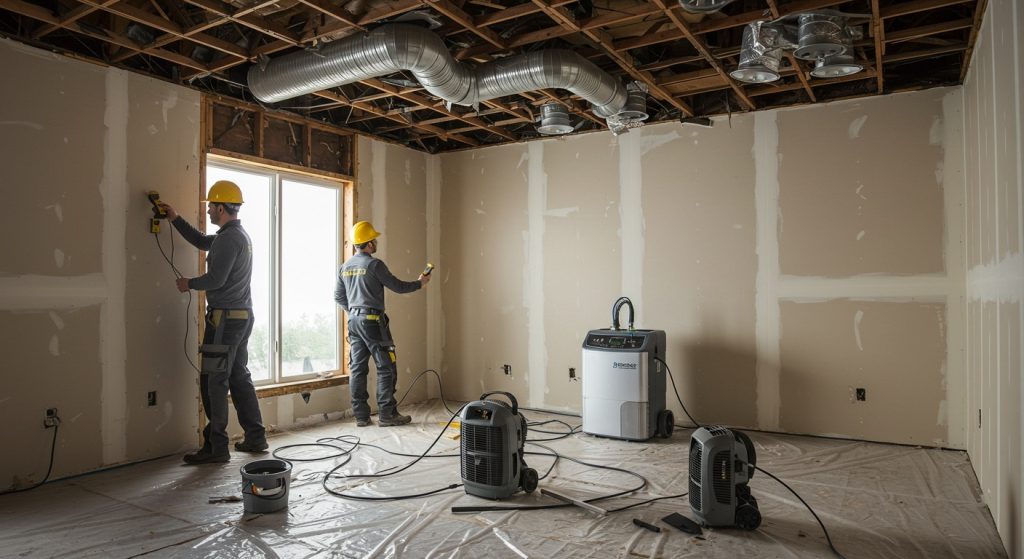
Fixing a failed pipe or drain addresses the source. Water damage restoration addresses the wet materials left behind. Depending on the cause, you may need a plumber, roofer or HVAC technician as well as a restoration team. Ask who is responsible for each part of the work.
A restoration assessment can include moisture readings around the stain and in connected areas. Readings must be interpreted for the material and instrument used; a single percentage is not a universal pass-or-fail test for every ceiling.
Our water damage restoration process covers assessment, water removal, structural drying and proposed repairs. If visible or suspected growth is found, discuss whether a separate mold remediation scope is needed.
What to ask before the ceiling is closed or painted
- Has the source been identified and repaired, or is more investigation needed?
- Which ceiling, wall or floor areas were checked for moisture?
- Which materials can be dried, and which are proposed for removal?
- How will drying progress be checked before reconstruction?
- Does the repair estimate include insulation, drywall, texture and paint, or are these separate?
Drying time and repair cost depend on the affected materials and scope. A fixed number of days or a price based only on the visible stain can leave important work unaccounted for.
Keep a simple damage record
Save dated photos, the source-repair invoice, restoration estimates and receipts. If you intend to make an insurance claim, contact your insurer and ask what information it needs before materials are discarded, while addressing urgent hazards promptly.
The Texas Department of Insurance explains that coverage depends on the cause and policy terms. A sudden leak, ongoing seepage and outside flooding may be treated differently. Regent can provide documentation of restoration work; your insurer determines coverage.
Common questions about ceiling water stains
Can I paint over a stain once it looks dry?
First confirm that the source has been addressed and the affected materials are ready for repair. Paint can hide discoloration but will not stop a leak or dry hidden moisture.
Does a ceiling stain always mean mold?
No. Discoloration alone does not identify mold. Report visible growth or a musty odor during the assessment rather than assuming the stain establishes the cause.
What if the stain stops growing?
Keep the photos and arrange investigation if the source is unknown. An intermittent leak may stop between showers, appliance cycles or rain events.
Get help with water damage in Dallas-Fort Worth
Call Regent Restoration at (214) 731-4624 to discuss the affected rooms and response availability. For a Plano property, see our Plano water damage restoration page and guide to common water-damage sources.