
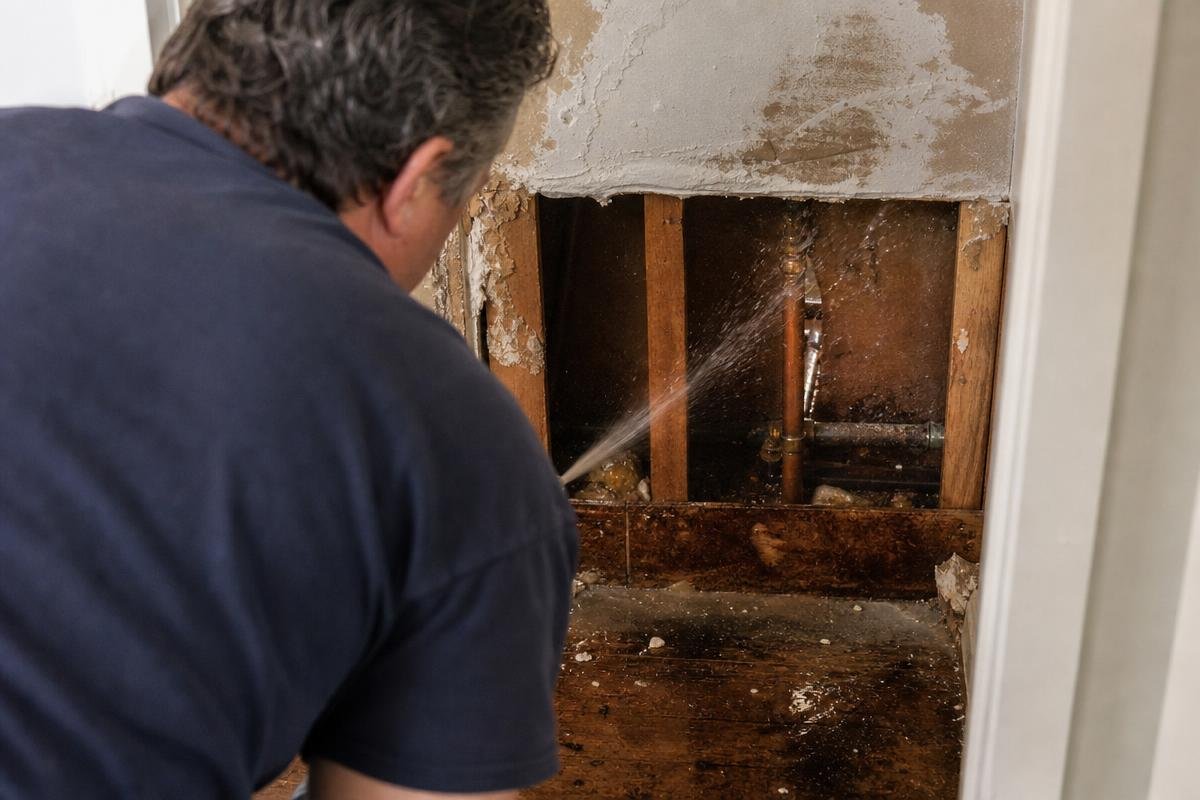
It’s 2 a.m. on a January night in Lewisville, the temperature dropped below 20°F hours ago, and behind the drywall near the kitchen there’s a muffled pop you never hear. By morning you’re standing in a flooded hallway with a soaked subfloor and water spreading toward the living room. North Texas freeze events are one of the most common burst pipe causes we see, but they’re far from the only one. Older homes near Old Town Lewisville still run original galvanized lines, and the region’s notoriously hard water quietly destroys pipes from the inside out. We’ve been responding to water damage in this area since 2009, and we know exactly what breaks pipes here and why.
Burst pipe in your home? We respond around the clock, every day of the year.
Key Takeaways
- Freezing temperatures are the most urgent burst pipe cause in Lewisville, but seven other factors are just as damaging year-round.
- Homes built in the 1970s and 1980s in Denton County often still have original galvanized or cast-iron supply lines that are overdue for replacement.
- Hard water here, typically 15 to 25 grains per gallon, builds mineral scale that narrows pipes and raises internal water pressure over time.
- After a pipe bursts, the plumber fixes the break, but hidden moisture inside walls and floors still needs professional drying to prevent mold.
- Most standard homeowners policies cover sudden burst pipe damage, but the fine print on what your policy actually covers varies widely.
This happens more than most homeowners expect. Our winters feel mild most of the year, but a single hard freeze can push pipes past their limit fast. This article covers the 8 most common burst pipe causes in homes across the DFW area, the warning signs to catch before a failure, and what to do in that critical first hour. If you’re already dealing with an active break, go straight to our guide on what to do after a burst pipe. Regent Restoration has seen what these failures do to real homes, and we want you to know what to watch for before it happens to yours.
Why Lewisville Homes Are Especially Vulnerable to Burst Pipes
Most of Texas gets a pass on frozen pipe warnings. North Texas does not. The combination of periodic hard freezes, expansive clay soil, and aging plumbing in older neighborhoods puts homes in this area at real risk year after year. Understanding why helps you act before a burst pipe turns into a flood cleanup that runs into the tens of thousands of dollars.
North Texas Freeze Events
This area sits in USDA Hardiness Zone 8a. Winters are mild most years, which is exactly the problem. Pipes in exterior walls, unheated garages, and attic runs are rarely insulated to handle a hard freeze. When temperatures drop below 20°F, as they did during Winter Storm Uri in February 2021, those pipes are exposed.
The physics are unforgiving. Water expands roughly 9 percent in volume when it freezes, and that expansion creates pressure spikes that can exceed 2,000 psi inside the pipe wall. The pipe does not crack where the ice forms. It splits at the weakest point downstream, often inside a wall or ceiling. Uri alone produced a surge of burst pipe claims that overwhelmed insurance adjusters across the region for weeks.
Expansive Clay Soil
The soil under your yard is not stable. The “black gumbo” clay common throughout this region swells when it absorbs water and shrinks when it dries out. That seasonal movement exerts lateral and vertical stress on buried water lines. A rigid pipe, especially an older one, cannot flex with that kind of ground movement indefinitely. For a deeper look at how this soil behavior affects your home’s structure, read our post on foundation moisture and clay soil in North Texas.
Aging Housing Stock
Neighborhoods near Old Town Lewisville and subdivisions along FM 407 near Castle Hills built in the 1970s and 1980s frequently contain original galvanized steel or cast-iron supply lines. Those materials have a functional lifespan of 40 to 70 years. Mineral scale from hard local water, typically 15 to 25 grains per gallon, builds up inside the bore over decades. The pipe wall thins and weakens. A pressure spike that a newer pipe would handle without issue can split an old galvanized line at the seam.
If your home was built before 1985, a professional pipe inspection is worth scheduling now, before you need emergency water damage restoration in Lewisville.
Not sure if your pipes are at risk? Schedule a free assessment and let our team check your most vulnerable runs before winter.
What Are the Most Common Causes of Burst Pipes?
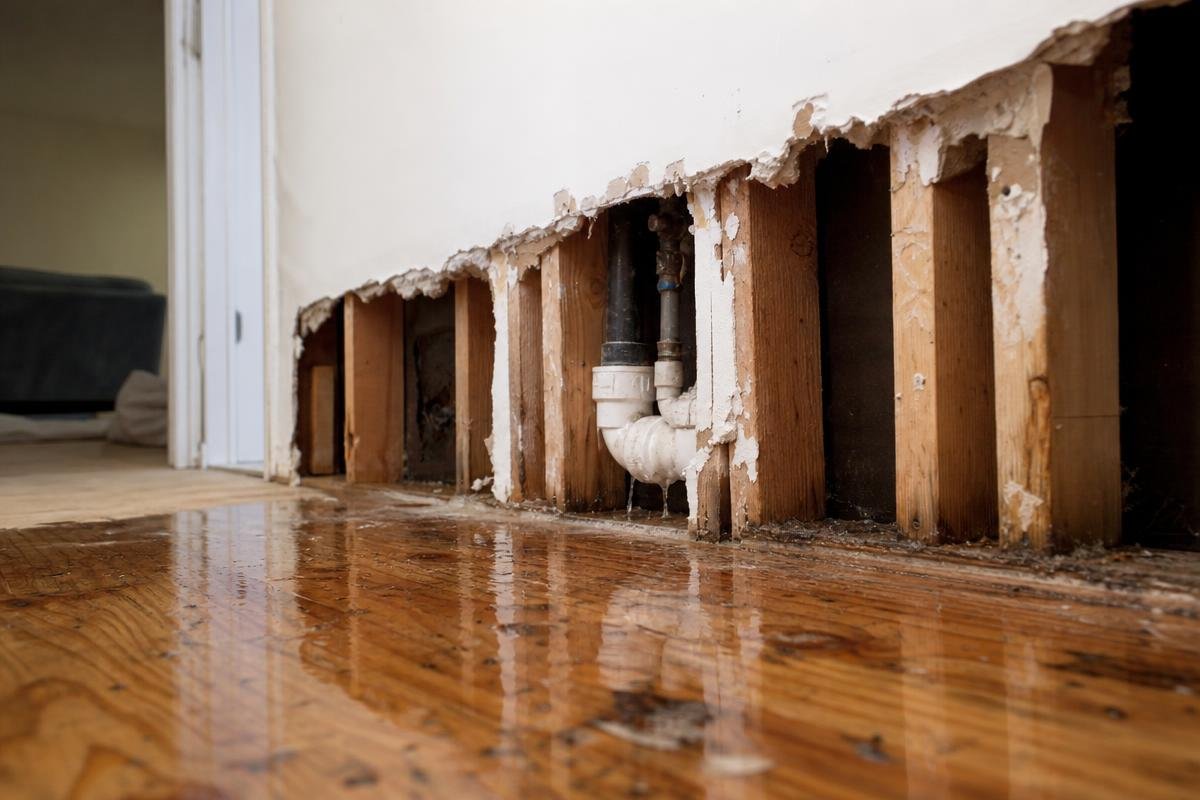
Pipes burst when internal pressure or physical stress exceeds what the pipe material can handle, and eight conditions cause that to happen most often in North Texas homes. Some of these are seasonal. Others build quietly for years before the pipe finally gives out. Knowing which one you’re dealing with changes everything about how you respond.
1. Freezing Temperatures
Freezing is the highest-risk failure mode here because that 9 percent expansion has nowhere to go inside a sealed pipe. Pipes in exterior walls without insulation and attic runs are the most exposed spots in DFW homes. Our local conditions section covers the freeze mechanism in detail, including how repeated freeze-thaw cycles create micro-fractures even when a pipe doesn’t fully burst.
2. Excessive Water Pressure
Normal residential water pressure runs between 40 and 60 psi. Above 80 psi, pipe walls and fittings take on stress with every water draw. A pressure-reducing valve, called a PRV, installed at the meter is the standard fix. You can test your pressure right now with a $15 gauge from any hardware store.
3. Pipe Corrosion
Galvanized steel corrodes from the inside out as iron oxide narrows the bore and weakens the pipe wall. Copper develops pinhole leaks from aggressive water chemistry over time. PVC and CPVC become brittle with age and UV exposure. Rust-colored water coming from your tap is a warning sign worth taking seriously. Corrosion-related leaks often show up first as ceiling water stains before any visible pipe damage appears.
4. Clogs and Blockages
A severe clog acts like a dam, building pressure behind the obstruction until something gives. Our municipal water runs notably hard, which accelerates mineral scale buildup inside supply lines. Grease buildup in kitchen drain lines creates the same pressure problem on the drain side. Burst pipes aren’t just a winter event. Summer calls are common in Flower Mound and Corinth when scale-narrowed pipes finally fail under peak demand.
5. Tree Root Intrusion
Roots follow moisture into hairline cracks in underground supply and sewer lines. Oaks, willows, and cottonwoods planted near utility easements are elevated risk. When roots reach a sewer line, the failure is fast and messy. Our team handles sewage cleanup lewisville when root intrusion causes a sewer line failure inside or near the home.
6. Water Hammer
Water hammer is a pressure shockwave created when fast-closing solenoid valves, the valves inside washing machines and dishwashers, cut off flow suddenly. You’ll hear it as a banging sound in the walls when those appliances shut off. Water hammer arrestors installed at the appliance connection absorb the shock and eliminate the problem.
7. Accidental Physical Damage
A nail or screw driven into a wall during a renovation can nick or fully puncture a supply line. Improper pipe support causes vibration fatigue over time, which weakens joints. Any renovation near plumbing should include a pipe locator scan before fasteners go in.
8. Poor Installation or Aging Joints
Compression fittings that were never properly torqued, soldered joints with voids, and push-fit connectors past their rated lifespan all fail quietly. This is especially common in homes with multiple owners and years of piecemeal DIY repairs. The joint fails long after the original installer is gone, and the damage lands on you.
Warning Signs Your Pipes Are at Risk Before They Burst
Most burst pipe water damage doesn’t happen without warning. The signs show up days or weeks earlier. Homeowners in older subdivisions near Copper Canyon and communities across North Texas just don’t always know what to look for.
Visible and Audible Red Flags
These are the signals you can see and hear without any special tools:
- Rust or brown discoloration in tap water. This points to internal pipe corrosion, especially in galvanized steel lines common in homes built before 1990.
- Banging or clanking inside walls when water runs. That sound is usually water hammer (a pressure surge when flow stops suddenly) or a pipe that’s lost its support bracket.
- Damp spots, bubbling paint, or soft drywall with no obvious source. A slow leak behind the wall is already doing damage. If you’ve noticed ceiling water stains, that’s the same problem working from above.
- An unexplained spike in your water bill. If usage hasn’t changed but the bill jumped, water is going somewhere it shouldn’t.
- Low pressure at fixtures that used to run strong. Gradual pressure loss at multiple fixtures often means a supply line is partially blocked or already failing.
Water Quality and Pressure Changes
Local water runs 15 to 25 grains per gallon, which is genuinely hard. That mineral load leaves scale on faucet aerators you can see with your eyes. What you can’t see is the same buildup narrowing your supply lines from the inside. A sulfur or metallic smell from the hot tap is another red flag, often tied to pipe corrosion North Texas homeowners overlook until the damage is done.
On the pressure side, test your hose bib with an inexpensive gauge. Anything above 80 psi is a call-a-plumber situation. A sudden pressure drop across the whole house, not just one fixture, often means a main line failure has already started. Damp drywall is not a “wait and see” situation either. In our warm, humid conditions, mold can establish behind walls within 24 to 48 hours. Small plumbing leaks cause major mold problems faster than most homeowners expect, and by the time you feel soft drywall, mold remediation lewisville may already be part of what’s needed.
If you notice two or more of these signs at once, call a licensed plumber before the pipe makes the decision for you.
What to Do in the First Hour After a Pipe Bursts
Immediate Steps
Stay calm. The next 60 minutes matter more than most homeowners realize. Work through these steps in order.
- Shut off the main water supply valve. It’s usually near your water meter at the street or inside the garage on the wall closest to the street. Turn it clockwise until it stops.
- Cut power to affected rooms. If water is pooling near outlets, appliances, or your electrical panel, flip those breakers now. Water and live circuits are a serious hazard.
- Open faucets throughout the house. This drains the remaining pressure in the lines and reduces the volume of water still pushing out.
- Move valuables off wet floors. Furniture legs, electronics, rugs, and anything sitting on a wet surface should come up immediately.
- Document everything before you touch it. Take photos and video of every wet surface, every damaged item, every puddle. Your insurance adjuster will need this evidence.
- Call a licensed plumber to fix the pipe. Then call us at (214) 731-4624. Those are two separate calls for two separate problems.
Why You Need a Restoration Company, Not Just a Plumber
A plumber fixes the broken pipe. That’s their job, and they’re good at it. But they don’t carry industrial air movers, dehumidifiers, or moisture meters. They won’t extract standing water from your subfloor or test the inside of your wall cavities for saturation. That work belongs to a different trade entirely.
In our warm climate, mold can begin developing in wet building materials within 24 to 48 hours. In summer, that window shrinks. Water sitting inside drywall, insulation, or wood flooring doesn’t just dry on its own. It migrates deeper and feeds mold. Read more about what happens after the plumber leaves and why water damage mitigation is the crucial next step.
Regent Restoration has been IICRC certified and serving homeowners in Flower Mound, Corinth, and across the North Texas area since 2009. Our office is at 824 Office Park Circle #100, Lewisville, TX 75057, and we respond within 60 minutes, around the clock.
Pipe just burst? Call us now at (214) 731-4624. We respond within 60 minutes, day or night, and we handle the water damage your plumber can’t.
Does Homeowners Insurance Cover Burst Pipes in Texas?
Most Texas homeowners assume their policy covers a burst pipe. Usually it does, but the details matter more than the assumption. After Winter Storm Uri hit the region, thousands of homeowners filed claims, and many were surprised to learn their payout depended heavily on how the adjuster classified the damage. Understanding your policy now, before a pipe bursts, saves real money later.
What Standard HO-3 Policies Typically Cover
An HO-3 policy is the standard homeowners insurance form used across Texas. It covers sudden and accidental water damage, meaning the pipe failed quickly and without warning. If that’s what happened, your policy should cover tear-out, drying, structural repairs, and replacement of damaged flooring and drywall. If the home becomes uninhabitable during repairs, loss of use coverage may also apply, paying for a hotel or temporary rental while work is underway.
Check your declarations page, the summary sheet at the front of your policy, for your coverage limits and deductible. If you need help reading it, our guide on what your homeowners policy declarations page actually tells you walks through the key numbers line by line.
What Gets Denied
Adjusters deny burst pipe claims when they can classify the damage as neglect rather than a sudden event. If your pipe showed rust staining, low water pressure, or visible corrosion for months before it finally gave out, the insurer may argue you had time to fix it. Slow, ongoing leaks are the most common denial basis. Older galvanized steel lines, common in Denton County homes built in the 1970s and 1980s, are especially vulnerable to this scrutiny.
One more distinction worth knowing: flood damage from external sources, such as rising groundwater or storm runoff, is excluded from standard HO-3 policies entirely. That requires separate flood insurance. Burst pipe water damage and flood damage are not the same thing in your policy’s fine print, and adjusters treat them very differently. Understanding actual cash value vs. replacement cost coverage also affects what your policy actually pays out after a claim is approved.
How to Prevent Burst Pipes in Your Lewisville Home
Prevention is always cheaper than restoration. A few hours of prep work before a hard freeze, and a simple annual maintenance routine, can keep you out of a very expensive situation. As we covered in the local conditions section, Zone 8a winters can spike well below 20°F with little warning, and that temperature swing is what turns a vulnerable pipe into a burst pipe.
Before a Hard Freeze Checklist
- Wrap exposed pipe runs in exterior walls, the attic, and the garage with foam pipe insulation. It runs about $1 to $2 per linear foot at any hardware store.
- Disconnect garden hoses from outdoor hose bibs and install insulated hose bib covers before temperatures drop.
- Locate your main shutoff valve now, before you need it. Confirm it turns freely.
- Set your thermostat no lower than 55°F if you leave town during winter months.
- Open cabinet doors under kitchen and bathroom sinks on exterior walls. Warm air circulation matters more than most people realize.
- Let a slow trickle run from the faucet farthest from your main shutoff during any hard freeze warning.
- Schedule a licensed plumber to inspect pipe runs in unheated spaces before November. Do not wait for the first freeze advisory.
Large oaks and cottonwoods common in established FM 407 neighborhoods are worth checking against utility easement maps before that inspection. Tree roots and buried supply lines do not mix well.
Year-Round Maintenance
Test water pressure at the hose bib once a year. If it reads above 80 psi, install a pressure-reducing valve (PRV). High water pressure pipe damage is slow and silent until it is not. Flush your water heater annually to clear sediment that speeds up corrosion from the inside. Have a plumber camera-inspect underground lines every five to seven years if large trees sit near your utility easements. And consider a whole-home water shutoff sensor with automatic closure. These devices detect a sudden flow spike and close the main valve before water spreads through your floors and walls.
If you already spot ceiling water stains from common plumbing leaks, treat that as an early warning, not a cosmetic problem. When prevention does fail, fast response is what limits the damage. Our team at water damage restoration lewisville responds around the clock, every day of the year, because burst pipes do not wait for business hours.
Frequently Asked Questions
What is the most common cause of burst pipes in North Texas?
Hard freeze events are the leading cause across the DFW area. Pipes running through exterior walls, unheated garages, and attic spaces are most vulnerable when temperatures drop below 20°F. After Winter Storm Uri in February 2021, burst pipe claims were the single largest category of homeowner insurance filings across the region.
How much water can a burst pipe release?
A standard 3/4-inch supply line at 60 psi can release 6 to 8 gallons per minute. A pipe that bursts overnight and goes undetected until morning can release 2,500 gallons or more. Knowing where your main shutoff valve is before an emergency is the single most impactful thing you can do right now.
Does homeowners insurance cover burst pipe damage in Texas?
Most standard Texas HO-3 policies cover sudden and accidental burst pipe damage to the structure, but not the pipe repair itself. Slow leak damage is typically excluded. Review your declarations page carefully, and see how our team works directly with your insurance carrier to document and file your claim correctly.
How long does water damage restoration take after a burst pipe?
The drying phase typically takes 3 to 5 days. Structural repairs take 1 to 2 weeks depending on scope. Subfloor saturation, mold growth, and asbestos testing in older homes can all extend that timeline. Our team coordinates directly with your insurance adjuster throughout the process.
Can a pipe burst without freezing?
Yes. High water pressure, corrosion, clogs, water hammer, and poor installation can all cause a burst at any time of year. In the Flower Mound and Corinth areas, summer burst pipe calls are common when clay soil dries and shifts, stressing underground supply lines.
I found water damage after my plumber fixed the pipe. What do I do now?
Call a restoration company immediately. The plumber fixed the source, but water has already migrated into wall cavities, subfloor, and insulation. Read what happens after the plumber leaves and why it matters. Moisture meters and thermal imaging find saturation in areas that look completely dry to the eye.
Can mold grow after a burst pipe?
Mold can begin colonizing wet materials within 24 to 48 hours in our warm conditions. Early signs include a musty smell, dark spotting on drywall, and worsening allergy symptoms. If your home was wet for more than 24 hours before drying began, schedule a professional assessment through our mold remediation lewisville.
A burst pipe does not wait for business hours. Our team is available around the clock, every day of the year, and we respond within 60 minutes. Call (214) 731-4624 or visit us at 824 Office Park Circle #100, Lewisville, TX 75057. The faster you act, the less damage you face.
Ready to Get Started with Regent Restoration?
Call (214) 731-4624 to speak with our team directly. We’re ready to answer your questions, walk you through your options, and help you find the right solution for your needs. Whether you’re just starting to plan or ready to move forward, we’ll make the process simple and stress-free.
Reach out today and let’s talk about how we can help.