
Denton, TX is a vibrant college town with deep roots, tree-lined neighborhoods, and a thriving downtown square. But the same North Texas conditions that make Denton a great place to live also expose homes to a wide range of water damage risks. From the historic bungalows in Quakertown Historic District to the newer builds around Robson Ranch, every property in Denton faces unique vulnerabilities related to the local climate, soil composition, and infrastructure.
Understanding the most common causes of water damage in the area can help homeowners take preventive steps and respond quickly when problems arise. Below, we break down the leading causes of water damage that affect Denton homes, with specific attention to local conditions and neighborhoods.
North Texas Clay Soil and Foundation Movement
One of the biggest contributors to water damage in Denton homes is the expansive clay soil found throughout North Texas. This type of soil swells dramatically when saturated and shrinks during dry spells, creating a constant cycle of pressure against your foundation. Over months and years, this movement leads to cracks in foundation slabs, basement walls, and crawl spaces, giving water a direct path into your home.
Homes in neighborhoods like Windsor Park, Idiot’s Hill, and the areas around North Lakes Park are particularly susceptible. Many of these properties were built on heavy clay deposits, and the seasonal fluctuations between Denton’s wet springs and dry summers accelerate the expansion-contraction cycle. Once foundation cracks develop, even moderate rainfall can push groundwater through those gaps and into interior spaces.
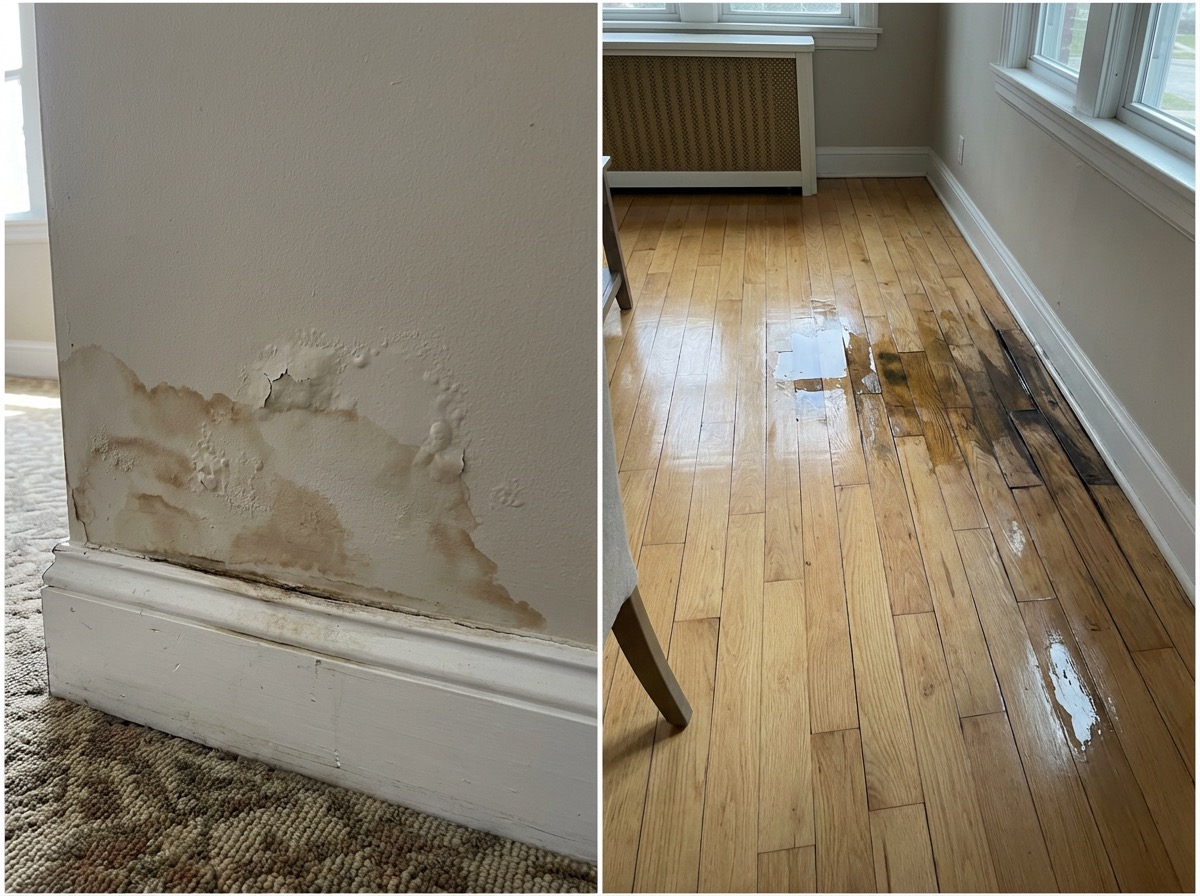
Signs of clay soil-related water intrusion include damp or musty-smelling rooms, visible cracks in drywall or tile floors, doors and windows that stick, and water stains along baseboards. Homeowners should monitor their foundation regularly and ensure proper drainage slopes away from the structure on all sides.
Seasonal Storms and Flash Flooding
Denton County experiences some of the most intense seasonal storms in Texas. Between March and June, powerful thunderstorms can drop several inches of rain in under an hour, overwhelming drainage systems and sending water into streets, yards, and homes. Flash flooding along Pecan Creek, Hickory Creek, and the Elm Fork Trinity River corridor has historically impacted homes in South Denton and along low-lying areas near the university campuses.
The area around UNT and TWU sees frequent storm-related water issues due to aging stormwater infrastructure and the density of older residential properties. Homes near the Denton Square and the surrounding blocks often have original drainage systems that were not designed for the intensity of modern storm events. When these systems are overwhelmed, water backs up through storm drains, floods basements and ground-level units, and saturates landscaping that then directs moisture toward foundations.
If your home has experienced storm-related flooding, prompt water damage restoration is critical to prevent secondary damage like mold growth, warped flooring, and structural compromise. Acting within the first 24 to 48 hours significantly reduces the scope of repairs needed.
Plumbing Failures and Aging Infrastructure
Denton’s housing stock spans more than a century. The Quakertown Historic District features homes dating back to the early 1900s, while neighborhoods like Rayzor Ranch and Robson Ranch include builds from the 2000s and 2010s. Across this wide range, plumbing failures remain one of the most frequent causes of interior water damage.
In older Denton homes, galvanized steel pipes corrode from the inside out, gradually restricting water flow before eventually developing pinhole leaks or full ruptures. Homes built in the 1970s through the 1990s may have polybutylene supply lines, a material known for brittleness and sudden failure. Even newer homes are not immune, as poor installation, shifting foundations, and mineral buildup in Denton’s hard water can stress joints and connections over time.
Common plumbing-related water damage scenarios include:
- Burst supply lines behind walls or under slab foundations
- Slow leaks under kitchen and bathroom sinks
- Failed washing machine hoses flooding laundry rooms
- Water heater tank failures in garages and utility closets
- Toilet supply line ruptures, especially in upstairs bathrooms
A single burst pipe can release hundreds of gallons of water per hour into a home. If you experience a plumbing emergency, shut off the main water supply immediately and contact an emergency plumbing professional to minimize damage.
Roof Leaks and Wind Damage
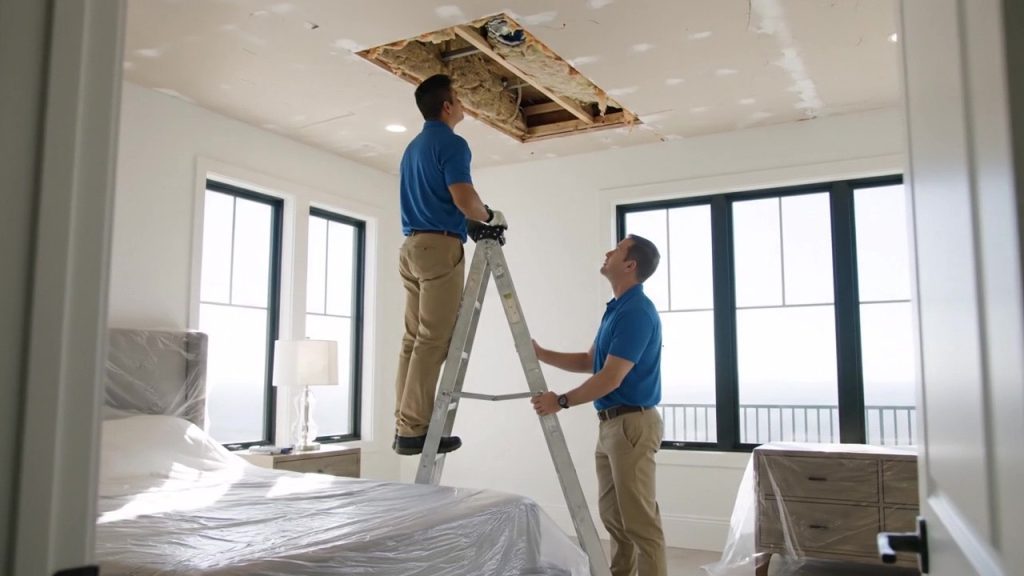
North Texas is no stranger to severe weather, and Denton sits right in the path of storms that roll across the Great Plains. Hail, high winds, and driving rain can compromise roofing materials in a single storm event. Missing or cracked shingles, damaged flashing around vents and chimneys, and deteriorated sealant around skylights all create entry points for water.
Homes throughout Denton, from the established neighborhoods near Clear Creek Natural Heritage Center to the subdivisions along Teasley Lane and Loop 288, experience roof-related water damage every storm season. The damage is often subtle at first, appearing as small ceiling stains or damp attic insulation, but left unaddressed, a roof leak can escalate into significant structural damage and mold growth.
Regular roof inspections, particularly after major storm events, are essential. Addressing even minor roof repair needs promptly can prevent thousands of dollars in interior water damage and the complications that follow.
Appliance Malfunctions and Water Heater Failures
Household appliances are among the most overlooked sources of water damage. Dishwashers, refrigerators with ice makers, washing machines, and water heaters all have supply lines and internal components that degrade over time. In Denton’s hard water conditions, mineral deposits accelerate wear on valves, gaskets, and heating elements, shortening the effective lifespan of these appliances.
Water heater failures are especially damaging. Most residential water heaters hold 40 to 50 gallons, and when a tank corrodes through or a pressure relief valve fails, the entire contents can flood the surrounding area within minutes. Homes in Robson Ranch and other master-planned communities often have water heaters located in interior utility closets or upstairs, meaning a failure can affect multiple rooms and levels.
Replacing rubber supply hoses with braided stainless steel lines, inspecting appliance connections annually, and flushing your water heater at least once a year can significantly reduce the risk of an appliance-related water emergency.
Sewer Backups and Drainage Issues
Sewer backups represent one of the most unpleasant and hazardous forms of water damage. In Denton, several factors contribute to sewer system overloads. The city’s older neighborhoods, particularly those near the Denton Square and along Oak Street and Hickory Street, have aging sewer infrastructure that can be overwhelmed during heavy rain events. Tree root intrusion into older clay sewer lines is another common cause, as mature oak and pecan trees throughout Denton send roots deep into underground pipe joints.
When sewage backs up into a home through floor drains, toilets, or bathtubs, the contamination requires professional sewage cleanup due to the biological hazards involved. Category 3 or “black water” contains bacteria, viruses, and other pathogens that make DIY cleanup unsafe. Affected materials like carpet, drywall, and insulation typically require removal and replacement.
Crawl Space and Basement Moisture
While slab-on-grade construction is common in newer Denton developments, many older homes in areas like Idiot’s Hill and the neighborhoods surrounding TWU have pier-and-beam foundations with crawl spaces. These crawl spaces are vulnerable to moisture accumulation from groundwater seepage, condensation, and poor ventilation, especially during Denton’s humid spring and summer months.
Excess crawl space moisture migrates upward through floor systems, causing wood floor water damage repair needs, warped subfloors, and persistent musty odors in living spaces. Prolonged moisture exposure also creates ideal conditions for mold colonies to establish, turning a ventilation problem into a health concern.
Proper crawl space management includes installing vapor barriers, ensuring adequate ventilation, and addressing any standing water or drainage issues around the home’s perimeter.
How Denton’s Proximity to Waterways Increases Risk
Denton is situated near several significant waterways, including Pecan Creek, Hickory Creek, the Elm Fork Trinity River, Lake Lewisville, and Lake Ray Roberts. While these water features are part of what makes the area attractive, they also elevate the risk of flooding for nearby properties. Homes in South Denton near Pecan Creek and those along low-lying corridors toward Corinth and Lewisville face the highest exposure during heavy rain events.
Properties in flood-prone zones should consider flood insurance even if it is not required by their mortgage lender. FEMA flood maps are updated periodically, and areas that were once considered low-risk may now fall within revised floodplain boundaries. Homeowners in neighboring communities like Flower Mound, Aubrey, and Krum face similar waterway-related risks and should take the same precautions.
Frequently Asked Questions
What is the most common cause of water damage in Denton, TX?
Plumbing failures and seasonal storm flooding are the two leading causes. Denton’s combination of aging infrastructure in older neighborhoods, expansive clay soil, and intense spring thunderstorms creates a perfect storm for water damage. Foundation cracks from soil movement and overwhelmed drainage systems during flash flood events also contribute significantly.
Does Denton’s clay soil really cause water damage?
Yes. The expansive clay soil throughout Denton County swells when wet and contracts when dry, putting constant pressure on home foundations. Over time, this movement creates cracks and gaps that allow water to enter crawl spaces, basements, and living areas. The effect is most pronounced in neighborhoods with heavy clay deposits, such as Windsor Park and areas near North Lakes Park.
Which Denton neighborhoods are most at risk for water damage?
Neighborhoods near Pecan Creek and Hickory Creek face elevated flood risk. Older areas around the Denton Square, Quakertown Historic District, and Idiot’s Hill are vulnerable due to aging plumbing and drainage infrastructure. Newer developments like Robson Ranch and Rayzor Ranch, while built to modern codes, can still experience water damage from appliance failures and storm events.
How quickly should I respond to water damage in my Denton home?
Ideally within the first 24 hours. Mold can begin growing on damp materials within 24 to 48 hours in Denton’s warm, humid conditions. The faster you extract standing water, remove saturated materials, and begin drying, the less extensive and costly the restoration process will be.
Does homeowners insurance cover water damage in Denton?
Most homeowners insurance policies cover sudden and accidental water damage, such as burst pipes or appliance failures. However, damage from gradual leaks, poor maintenance, or external flooding is typically excluded. Flood damage requires a separate flood insurance policy, which is especially relevant for Denton homeowners near creeks and floodplains. Always review your specific policy and contact your insurance provider for clarification.
Can water damage lead to mold in my Denton home?
Absolutely. Denton’s warm temperatures and humidity levels create favorable conditions for mold growth. Any water intrusion that is not thoroughly dried and treated within 24 to 48 hours can result in mold colonization on drywall, wood framing, carpet padding, and insulation. Professional mold remediation may be necessary if mold has spread beyond a small, contained area.
Protect Your Denton Home from Water Damage Today!
Whether you are dealing with an active water emergency or want to understand your home’s vulnerabilities, knowing the common causes of water damage in Denton is the first step toward protecting your property. If water damage has already occurred, Regent Restoration is available 24/7 to help Denton homeowners with fast, professional restoration services. Call (469) 658-0842 to speak with a restoration specialist today.

About Regent Restoration
Regent Restoration is a full-service property restoration company serving Denton and the greater Dallas-Fort Worth Metroplex. Our IICRC-certified technicians specialize in water damage restoration, mold remediation, fire damage restoration, and emergency plumbing services. With 24/7 availability and a commitment to fast response times, we help homeowners and businesses recover from property damage quickly and thoroughly.