
It’s 2 a.m. on a Wednesday. A grease fire starts in a Lewisville kitchen, the fire department arrives fast, and the flames are out within the hour. The crew clears the scene and everyone breathes a little easier. But the smoke damage is just getting started. Soot settles into ductwork, odor soaks into drywall, and residue films over surfaces you haven’t even checked yet. Knowing the signs of smoke damage early can be the difference between a manageable repair and a months-long restoration. We’ve been finding and fixing smoke damage across Denton County since 2009, and we know exactly where it hides.
Spotted something that doesn’t look right after a fire? Get eyes on it before it gets worse.
Key Takeaways
- Visible soot stains, lingering smoke odor, and discoloration around vents are among the most common signs of smoke damage in Lewisville homes.
- Smoke damage can hide inside walls, HVAC systems, and ductwork long after the fire is out and the air looks clear.
- North Texas heat accelerates smoke residue oxidation, meaning delayed inspection makes restoration harder and more expensive.
- Acting within 24 to 48 hours limits secondary damage and strengthens your insurance claim.
- Some smoke-damaged items, including food, medications, and certain fabrics, should be thrown away rather than cleaned.
- Documenting all visible damage before restoration begins protects your insurance claim.
Smoke does not stop moving when the fire goes out. It travels through HVAC ducts, soaks into drywall, settles deep into carpet fibers, and corrodes metal surfaces for hours after the last flame dies. What you can see in the first day is rarely the full picture.
We have been responding to fire and smoke calls in Lewisville since 2009. One thing we see constantly: homeowners who waited a few days to call because the damage looked minor. By then, smoke residue had already started eating into surfaces, and the insurance documentation window was closing fast.
This article covers 12 specific signs of smoke damage inside your home, organized by where they appear and what they mean for your property and your insurance claim. If you are unsure what your policy actually covers after a fire, our insurance claim support page breaks down exactly what to expect.
Why Smoke Damage Is More Than What You Can See
Most homeowners look at a fire-damaged room and assess damage by what’s charred or blackened. That’s the wrong way to think about it. Smoke is a mixture of gases, fine particles, and chemical compounds. It moves with air pressure and heat, not with flame. That means it travels far beyond the room where the fire started, often before you even know there’s a problem.
How Smoke Travels Through a Home
Smoke travels through a home via HVAC ductwork, air pressure differentials, and wall cavities, often reaching rooms far from the fire’s origin. Your HVAC system is the biggest reason hidden smoke damage shows up in rooms nowhere near the fire. Every time the system cycles, it pulls air through return vents and pushes it through supply ducts. Soot and odor particles ride that airflow and deposit on surfaces throughout the house. A kitchen fire can leave residue inside bedroom closets on the opposite end of the home.
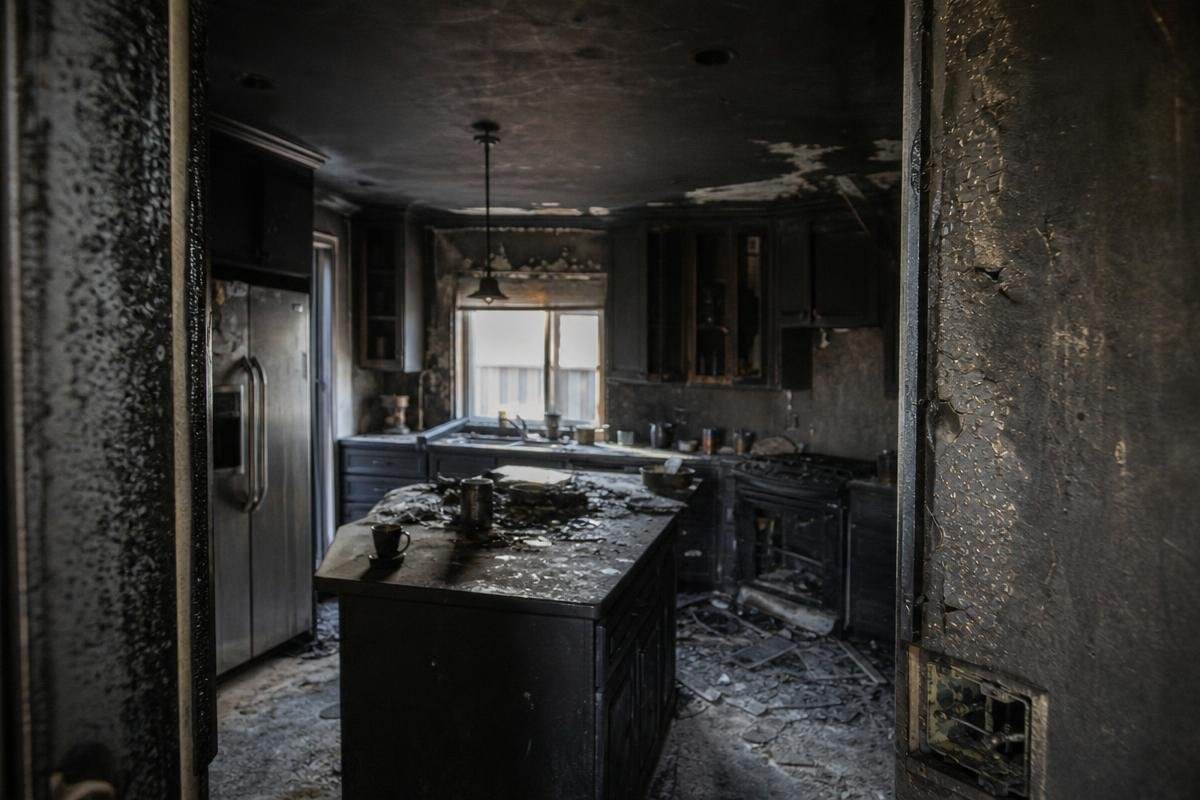
There are three types of smoke residue, and each one behaves differently. Wet smoke comes from low-heat smoldering fires. It leaves a sticky, smearing film with a sharp, pungent odor and is the hardest type to clean. Dry smoke comes from fast-burning, high-heat fires. It’s powdery and more widespread but easier to remove. Protein smoke is nearly invisible, leaves almost no visible stain, but bonds an extremely strong odor to every surface it touches. Kitchen fires almost always produce protein smoke. Knowing which type you’re dealing with changes the entire cleaning approach.
In older neighborhoods like Old Town Lewisville and Lakeview Estates, homes built in the 1970s through 1990s often have original ductwork with more joints and gaps. Residue accumulates in those gaps and recirculates for days after the flames are out. If your home has older ducts, smoke odor after a fire is not just a surface problem.
Why the First 48 Hours Matter
Smoke residue is acidic. It starts etching glass, corroding metal, and staining porous surfaces within hours of settling. After 48 to 72 hours, some finishes are permanently discolored, and odors bond more deeply into fabric and insulation the longer they sit. North Texas summer heat accelerates this process significantly, speeding up oxidation and locking residue into materials faster than it would in a cooler climate.
That window closes fast. If you suspect smoke damage anywhere in your home, the time to act is now, not after the weekend. Our team handles fire damage restoration in Lewisville around the clock, because those early hours are when the difference between salvageable and unsalvageable gets decided.
The 12 Signs of Smoke Damage: A Room-by-Room Checklist
Smoke moves through a home the way air does, which means damage rarely stays in one room. These 12 signs are what our technicians look for on every walk-through. Some are obvious. Some show up days later. All of them matter.
Signs 1-4: What You Can Usually See and Smell
Sign 1: Lingering smoke odor that returns after airing out. If you open the windows and the smell comes back within a few hours, smoke particles have bonded to porous materials like drywall, insulation, or wood framing. Airing out a room does not remove embedded particles. It just temporarily dilutes them.
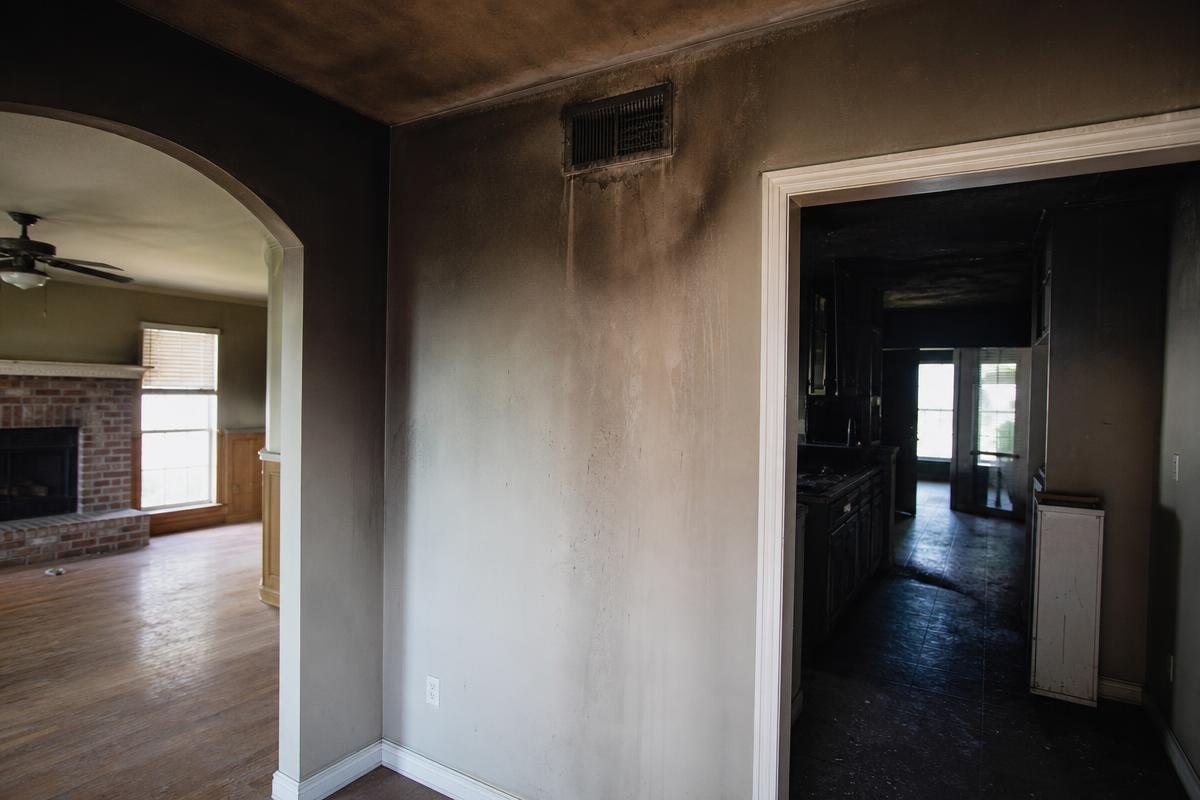
Sign 2: Yellow or brown discoloration on walls and ceilings. This is oxidized smoke residue. It continues darkening over time, even after the flames are gone. What looks like a faint stain today will be a deep yellow-brown stain within weeks if it is not treated.
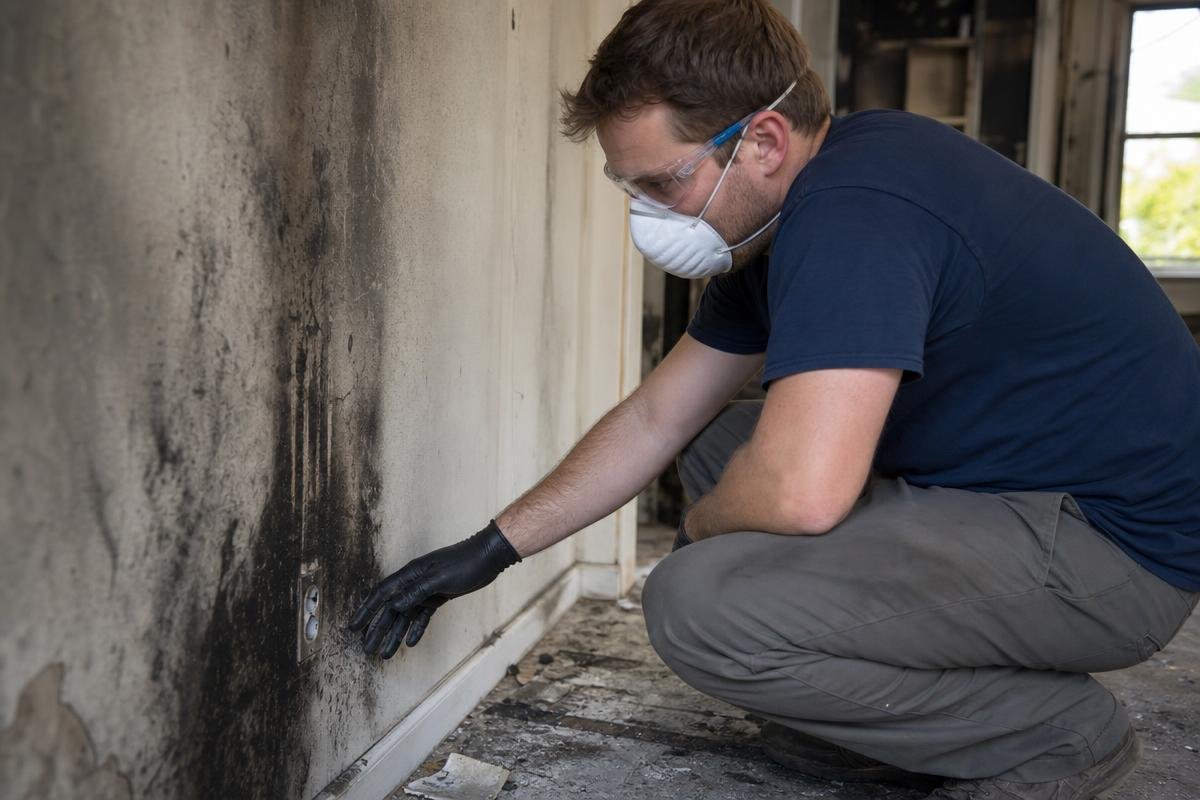
Sign 3: Soot stains around electrical outlets and switch plates. Smoke followed the air movement through your home’s wiring pathways to get there. That is not just a cosmetic problem. It is a fire hazard indicator that needs a professional assessment before you assume the wiring is safe.
Sign 4: Oily or sticky film on hard surfaces. This is wet smoke residue, left behind by low-temperature smoldering fires. It is far harder to clean than dry soot and smears if you wipe it with a standard cloth. Standard household cleaners will not break it down.
Signs 5-8: Surfaces, Fabrics, and Your HVAC System
Sign 5: Discoloration or persistent odor in upholstered furniture and drapery. Smoke particles embed deep in fibers and will not respond to standard cleaning methods. Professional carpet cleaning lewisville and content treatment are typically required to fully remove embedded smoke odor from soft materials.
Sign 6: Warped or discolored wood flooring. Heat and smoke exposure cause wood to buckle and discolor, sometimes in rooms that were not directly in the fire’s path. If you also had firefighting water involved, the subfloor underneath may be compromised and need wood floor water damage repair.
Sign 7: Discoloration or odor around HVAC vents and registers. This tells you the duct system has been contaminated. Every time your system runs, it redistributes smoke particles through the home. In older homes with original ductwork, the ducts can hold residue for years without proper cleaning.
Sign 8: Hazy film on windows and mirrors. This chemical deposit is often the first visible sign of smoke damage in rooms that were not near the fire room. It wipes off with a finger but leaves a smear. That film is the same residue coating your walls, just more visible on glass.
Signs 9-12: Hidden and Secondary Damage
Sign 9: Odors that intensify when the heat or AC runs. This confirms HVAC contamination. The system is pulling air through contaminated ducts and distributing it through every vent in the house. During North Texas summers, your AC runs constantly, meaning the problem compounds fast.
Sign 10: Corrosion or failure on electronics and appliances. Smoke residue is electrically conductive. It can cause circuit board and contact failure on televisions, computers, and kitchen appliances weeks after the fire, even if the devices appeared fine initially. Do not assume electronics are safe because they powered on right after.
Sign 11: Discoloration or odor in attic insulation and basement joists. Smoke rises and also settles into low-pressure zones. Attic insulation absorbs smoke readily, and the odor can re-enter living spaces through ceiling penetrations long after the fire event.
Sign 12: Water stains or soot carried into walls and subflooring. Firefighting water pushes smoke residue deeper into wall cavities and subflooring, creating a secondary damage pathway. In North Texas summer heat, that trapped moisture can produce mold growth within 24 to 48 hours. This is why flood cleanup and fire restoration often need to happen together, not as separate jobs.
Worried the smoke reached rooms you can’t see into? Schedule a same-day smoke damage inspection and get answers before the residue sets.
What to Throw Away After Smoke Damage (and What Can Be Saved)
One of the hardest decisions after a fire is figuring out what stays and what goes. Some things look fine but are not. Others look ruined but can actually be restored. Getting this wrong costs you real money, either by throwing away items your policy would have covered or by keeping items that are genuinely unsafe.
Items You Should Always Discard
Food and medications exposed to smoke need to go. Smoke residue carries carbon monoxide byproducts, formaldehyde, and volatile organic compounds. These chemicals penetrate cardboard, plastic wrap, and even sealed containers. It does not matter if the box looks untouched. If it was in the kitchen during a fire, throw it out.
The same rule applies to open cosmetics, skincare products, and anything that goes on your skin or in your mouth. Foam pillows, mattresses, and particleboard furniture with heavy smoke odor are also typically not worth saving. The porous material traps odor and residue at a level that standard cleaning cannot reach. Items with melted or heat-deformed plastic are gone too.
Before you throw anything away, photograph it and write down a description. Homeowners filing claims need that documentation to support content replacement coverage. Do this before disposal, not after.
What a Professional Can Often Restore
Hard surfaces hold up better than soft ones. Glass, metal, ceramics, and sealed wood furniture can usually be cleaned and saved. Electronics are often recoverable with professional cleaning, though you should not power them on first. Clothing and textiles can frequently be treated with ozone or thermal fogging. Documents can sometimes be recovered using freeze-drying and specialized cleaning methods.
The professional triage process for this is called pack-out and content cleaning. Our team inventories your belongings, removes salvageable items for off-site treatment, and documents everything that must be discarded. That inventory directly supports your insurance claim.
Whether your policy pays replacement cost or actual cash value changes what you receive for lost items. If you are unsure which you have, read up on actual cash value vs. replacement cost before your adjuster visits. The difference can be significant.
Not sure what can be saved and what needs to go? Call us at (214) 731-4624 and we will walk through it with you before you throw anything away.
How to Confirm Smoke Damage When You Are Not Sure
Sometimes the fire is small. The smoke clears. The house looks fine. But smoke residue is invisible in places you cannot reach, and the smell that fades after a few days often means the odor has absorbed into materials, not that it is gone. Before you decide nothing needs to be done, run through these quick checks.
DIY Tests Homeowners Can Do Right Now
These four tests take less than ten minutes and give you real answers, not guesses.
- White cloth test. Dampen a white cloth and wipe a wall or ceiling near where the smoke traveled. Yellow or brown residue on the cloth confirms soot deposit, even if the surface looks clean to the eye.
- HVAC smell test. Turn on your system and stand near a vent in a room far from the fire. Smoke smell at a distant vent means your ductwork is contaminated and circulating residue through the whole house.
- Fabric sniff test. Press your face into a couch cushion or carpet. If the odor is still present after 48 hours of open-window ventilation, the fibers have absorbed smoke and surface cleaning will not fix it.
- Outlet check. Use a flashlight to look along the edges of outlet covers and switch plates. Black or gray residue in those gaps is a reliable sign of hidden smoke damage inside your home’s electrical cavities.
Take photos of anything you find before touching it. Homeowners in older parts of the city especially should document early, since aging homes with original ductwork can hide significant contamination behind walls.
When You Need a Professional Inspection
DIY checks have real limits. Hidden smoke damage inside attic insulation, subfloor cavities, and ductwork requires thermal imaging and air quality testing. You cannot assess those areas with a cloth and a flashlight.
A professional inspection also creates written documentation for your insurance claim. That paperwork matters. Our IICRC certified team responds any time you call, and customers consistently tell us they appreciated that we explained everything in plain terms during the walk-through. If you are ready to take that step, our Lewisville fire damage restoration team starts every job with exactly that kind of thorough inspection.
What Smoke Damage Looks Like for Lewisville Homeowners Specifically
Where you live in the DFW area shapes how smoke behaves after a fire. The age of your home, the materials it was built with, and the summer heat all affect how far and how fast residue spreads. Homes in the older core of the city face different risks than newer builds on the west side.
Older Homes and Construction Types Common in Lewisville
A large share of homes in established Denton County neighborhoods were built between the 1970s and 1990s. Those homes often have original ductwork full of joints and gaps that trap soot and smoke odor after a fire. Smoke travels through those gaps and deposits residue in places you will never see without pulling walls open.
There is a more serious concern in pre-1990 construction. Floor tiles, pipe insulation, and popcorn ceilings from that era may contain asbestos. A fire or smoke event can disturb those materials, and testing is required before restoration begins. Our team handles asbestos abatement and can coordinate testing as part of the initial assessment. If you are also concerned about your home’s overall structural condition after a fire, the 9 warning signs of foundation problems is worth reading before restoration work begins.
North Texas Climate and How It Affects Smoke Damage
Summer temperatures in the DFW area regularly exceed 100 degrees Fahrenheit. That heat accelerates the chemistry of smoke residue. Soot oxidizes faster. Odors bond more deeply into drywall, wood framing, and fabric. Hidden smoke damage that might take weeks to surface in a cooler climate can become a real problem within days here.
Heat also multiplies the mold risk when firefighting water is involved. In summer conditions, mold can begin growing within 24 to 48 hours in wet areas. That is why we strongly recommend professional mold remediation lewisville alongside any fire damage work, not as an afterthought. Our office at 824 Office Park Circle #100, Lewisville, TX 75057 lets us reach most of the city quickly, and we aim to be on site within 60 minutes for emergencies inside our core service radius.
Frequently Asked Questions
Is my home safe to stay in after a smoke event?
Not necessarily. Smoke residue contains volatile organic compounds and carbon monoxide byproducts that linger in the air long after visible smoke clears. If your HVAC system ran during or after the fire, those compounds may have spread through every room. Children, elderly residents, and anyone with asthma or respiratory conditions face the highest risk. Only a professional air quality test can confirm whether indoor air is safe to breathe.
Will my homeowners insurance cover smoke damage in rooms that were not near the fire?
Yes, in most cases. Standard homeowners policies in the DFW area cover sudden and accidental fire and smoke damage, including smoke that travels to unaffected rooms. What your policy actually pays depends on what your homeowners policy declarations page actually tells you about coverage limits. It also matters whether you have actual cash value vs. replacement cost coverage. If the damage forces you out of your home temporarily, check your policy for loss of use coverage for Lewisville homeowners.
What is the difference between smoke damage and soot damage?
Soot is the visible black or gray residue that settles on surfaces after a fire. Smoke damage is broader. It includes chemical residue, odor compounds, and gases that penetrate drywall, insulation, and fabric without leaving any visible marks. A room can have serious smoke damage with almost no visible soot at all. That is why signs of smoke damage in distant rooms are never cosmetic problems you can simply paint over.
If you noticed any of these signs after a fire, do not wait to find out how far the smoke traveled. Call our Lewisville fire damage restoration team at (214) 731-4624 any time, day or night. We respond to emergency calls within 60 minutes across our service area, 24 hours a day, 365 days a year. The sooner we inspect, the more we can protect, and the stronger your insurance documentation will be.
Ready to Get Started with Regent Restoration?
Call (214) 731-4624 to speak with our team directly. We’re ready to answer your questions, walk you through your options, and help you find the right solution for your needs. Whether you’re just starting to plan or ready to move forward, we’ll make the process simple and stress-free.
Reach out today and let’s talk about how we can help.