
Plano is home to dozens of homeowner association (HOA) communities, from the large master-planned neighborhoods of Willow Bend and Stonebriar to the established communities of Hunters Creek, Deerfield, and Kings Ridge. Many of these communities include a mix of single-family homes, townhomes, and condominiums, each with its own set of considerations when water damage or other emergencies strike.
Living in an HOA community adds a layer of complexity to the restoration process. Questions about insurance responsibility, shared walls, common area damage, and communication protocols can slow down response times if homeowners and board members are not prepared. This guide covers the practical steps Plano HOA residents and board members need to know before, during, and after a restoration emergency.
Why HOA Communities Face Unique Restoration Challenges
In a traditional single-family home, the homeowner is responsible for the entire structure and property. In an HOA community, responsibility is divided between individual homeowners and the association. This division creates situations where a single water damage event can affect multiple parties with different insurance policies, different financial obligations, and different levels of urgency about getting the work done.
Townhomes and condominiums in Plano communities like those near Legacy West and in the Stonebriar area often share walls, plumbing risers, and roof structures. A burst pipe in one unit can cause water damage in adjacent units within minutes. A roof leak over a shared attic space can affect multiple units before anyone realizes there is a problem. These interconnected structures require a coordinated restoration approach that accounts for all affected areas, not just the unit where the damage is most visible.
Understanding Insurance Responsibilities in HOA Settings
One of the biggest sources of confusion in HOA restoration situations is determining who is responsible for what. The answer depends on the HOA’s governing documents (typically the CC&Rs, or Covenants, Conditions, and Restrictions), the master insurance policy, and the individual homeowner’s HO-6 policy.
The HOA Master Policy
Most HOA communities in Plano carry a master insurance policy that covers common areas, shared structures, and the exterior of buildings. The specific coverage varies by association, but it typically includes the building’s exterior walls, roof, hallways, lobbies, pools, clubhouses, and other shared amenities. Some master policies provide “bare walls” coverage (covering only the structural shell), while others provide “all-in” coverage that extends to interior fixtures and finishes as originally installed.
Individual Homeowner Policies (HO-6)
Individual homeowners in Plano HOA communities are typically responsible for insuring their personal property, interior improvements, and any upgrades made after the original construction. An HO-6 policy (also known as a condo or townhome policy) covers these items, as well as personal liability and additional living expenses if the unit becomes uninhabitable during restoration. Understanding exactly where the master policy ends and your individual policy begins is critical, and this is something every Plano HOA homeowner should clarify before an emergency occurs.
When Damage Crosses Unit Boundaries
When water damage originates in one unit and spreads to another, determining financial responsibility becomes more complex. In many Plano HOA communities, the association’s master policy covers damage to shared structures and common elements, while each homeowner’s individual policy covers damage within their own unit. If the damage was caused by negligence (for example, a homeowner failing to maintain their plumbing), the responsible party’s liability insurance may come into play. Having clear documentation and a professional water damage restoration assessment helps establish the scope and origin of the damage for insurance purposes.
Immediate Steps After Water Damage in an HOA Community
When water damage occurs in a Plano HOA community, time is critical. The steps you take in the first few hours can significantly affect the extent of the damage and the cost of restoration. Here is what homeowners and board members should do immediately:
Step 1: Stop the Water Source
If the water is coming from a plumbing failure, locate and shut off the water supply valve. In townhomes and condos, individual unit shutoff valves are sometimes located in utility closets or behind access panels. If you cannot find the unit-level shutoff, contact building maintenance or the HOA management company to shut off the main supply for the building. Every second counts when water is actively flowing into living spaces.
Step 2: Notify the HOA Board or Management Company
Contact your HOA board or property management company as soon as possible. Most Plano HOA management companies have emergency contact numbers for after-hours situations. The board needs to know about the damage so they can activate their own insurance claim process, notify affected neighbors, and coordinate access to common areas or shared structural components that may need inspection.
Step 3: Document Everything
Before any cleanup begins, document the damage thoroughly with photos and video. Capture the source of the water (if visible), the extent of the water spread, damage to walls, floors, ceilings, and personal belongings. This documentation will be essential for both your individual insurance claim and the HOA’s master policy claim. Note the date, time, and a description of how the damage was discovered.
Step 4: Contact a Restoration Professional
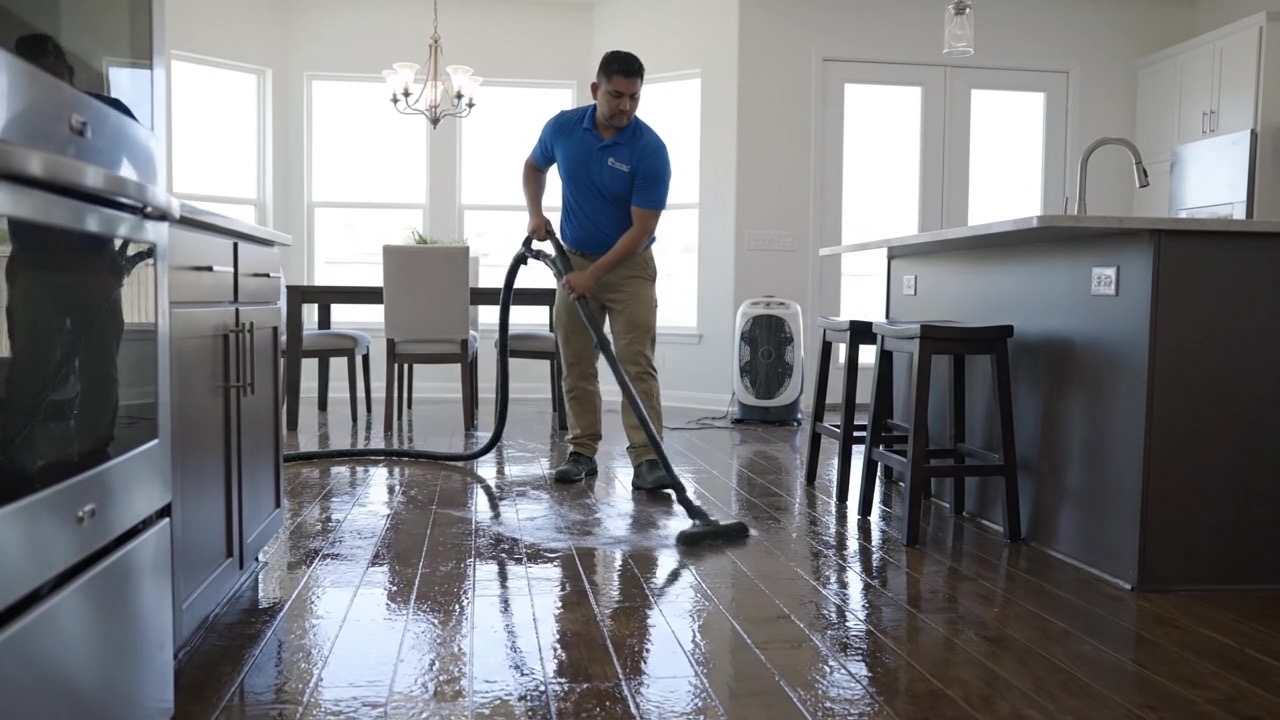
Professional flood cleanup should begin as soon as possible, ideally within the first few hours. Industrial water extraction, dehumidification, and air movement equipment are necessary to properly dry the structure and prevent mold growth, which can begin within 24 to 48 hours of water exposure. In multi-unit situations, the restoration company needs to assess not just the unit where damage is visible, but adjacent units and shared spaces that may also be affected.
Multi-Unit Considerations for Townhomes and Condos
Plano has a significant number of townhome and condominium communities, particularly in the Legacy area, near the intersection of Dallas North Tollway and Spring Creek Parkway, and throughout developments in Stonebriar. These multi-unit properties present specific challenges during water damage events that single-family homes do not.
Shared Walls and Moisture Migration
Water does not respect property boundaries. In townhomes with shared walls (also called party walls), water from a burst pipe or overflowing appliance in one unit can wick through drywall, insulation, and framing into the adjacent unit. Moisture can travel along wall cavities, through floor assemblies, and via shared attic spaces. A restoration company needs to use moisture meters and thermal imaging to map the full extent of water migration, even into areas where damage is not yet visible.
Shared Plumbing and HVAC Systems
Many multi-unit buildings in Plano share plumbing risers, sewer lines, and sometimes HVAC ductwork between units. A sewage backup in a shared sewer line can affect multiple units simultaneously, requiring professional sewage cleanup across all affected areas. Similarly, a leak in a shared plumbing riser can cause damage on multiple floors. Identifying these shared systems and understanding their routing is important for both prevention and effective restoration response.
Access Coordination
Restoring water damage in a multi-unit building often requires access to units other than the one where damage is most obvious. The restoration team may need to inspect adjacent units, access shared mechanical rooms, or work in common areas. This requires coordination with the HOA management company, individual homeowners, and sometimes tenants (if units are rented). Board members should ensure their emergency procedures include provisions for gaining access to units when immediate inspection is needed.
Communicating with Your HOA Board During a Restoration Emergency
Effective communication between homeowners and the HOA board is essential during a restoration emergency. Delays caused by miscommunication or unclear responsibility can lead to extended damage and higher costs for everyone involved.
- Report damage immediately, even if it seems minor. Small leaks in shared structures can escalate quickly.
- Provide your documentation (photos, video, written description) to the board and management company promptly.
- Ask for a copy of the HOA master insurance policy’s declaration page so you understand what is covered.
- Request written confirmation of the board’s decisions regarding restoration vendors, scope of work, and timeline.
- Keep a log of all communications, including emails, texts, and phone calls, with dates and names.
- If the HOA is slow to respond and damage is actively worsening, you may need to engage a restoration company directly to protect your unit, then work with the board on cost allocation afterward.
For HOA board members in communities like Willow Bend, Kings Ridge, and Deerfield, having a pre-established relationship with a restoration company and a clear emergency response protocol can save significant time and money when an incident occurs. Many Plano HOAs include restoration vendor contact information in their emergency procedures manual.
Handling Common Area Water Damage
Common areas in Plano HOA communities, including clubhouses, pools, hallways, stairwells, parking garages, and landscaped grounds, can also suffer water damage. Storm flooding, irrigation system failures, and plumbing leaks in shared buildings are the most common causes.
When common area damage occurs, the HOA board is responsible for initiating the restoration process and filing a claim under the master insurance policy. The board should engage a professional restoration company experienced in commercial and multi-unit projects, as the scope of work in common areas often involves different building materials, fire-rated assemblies, and code requirements than residential units.
Board members should also communicate with all residents about the damage, the restoration timeline, and any impacts on access to amenities. Transparency helps maintain trust and reduces the volume of individual inquiries that can overwhelm management staff during an already stressful situation.
Preventing Water Damage in Plano HOA Communities
Prevention is always less costly than restoration. Both individual homeowners and HOA boards in Plano can take proactive steps to reduce the risk and severity of water damage events.
For Individual Homeowners
- Know where your unit’s water shutoff valve is located and test it annually
- Replace rubber washing machine hoses with braided stainless steel hoses
- Inspect under sinks, around toilets, and behind appliances regularly for signs of moisture
- Have your HVAC system serviced annually, including clearing the condensate drain line
- Install water leak detectors near water heaters, washing machines, and under kitchen sinks
- Review your HO-6 policy annually to confirm adequate coverage for interior improvements
For HOA Boards and Management Companies
- Schedule annual inspections of shared plumbing, roof systems, and drainage infrastructure
- Maintain a reserve fund adequate to cover the deductible on the master insurance policy
- Establish a written emergency response plan that includes restoration vendor contacts and unit access procedures
- Ensure common area irrigation systems are properly maintained and have rain sensors to prevent overwatering
- Communicate regularly with homeowners about their maintenance responsibilities and reporting procedures
- Review the master insurance policy annually with the association’s insurance agent
Mold Concerns in Multi-Unit Settings
Mold is a significant concern in any water damage situation, but it is especially problematic in multi-unit buildings where moisture can be hidden within shared wall cavities, above drop ceilings, and in mechanical chases. In Plano’s warm, humid climate, mold can begin colonizing damp materials within 24 to 48 hours of water exposure.
Professional mold remediation in a townhome or condo setting requires careful containment to prevent spores from spreading to unaffected units through shared HVAC systems or wall penetrations. The remediation team must work with the HOA to coordinate access, manage containment barriers, and ensure that the air quality in adjacent units is monitored throughout the process. Carpet cleaning of affected units may also be necessary to remove mold spores trapped in carpet fibers and padding.
Frequently Asked Questions
Who pays for water damage restoration in a Plano HOA community?
It depends on the location and cause of the damage. Generally, the HOA master policy covers damage to common areas and shared structural elements, while individual homeowner HO-6 policies cover damage inside individual units. The CC&Rs for your specific community define the exact division of responsibility.
What should I do if water from my neighbor’s unit is damaging my unit?
First, try to notify your neighbor to shut off their water supply. Then contact the HOA management company and your own insurance provider. Document the damage thoroughly and request professional restoration services as quickly as possible to minimize secondary damage.
Can the HOA require homeowners to use a specific restoration company?
For common area damage covered by the master policy, the HOA board typically selects the restoration vendor. For damage within individual units covered by a homeowner’s HO-6 policy, the homeowner generally has the right to choose their own restoration company. However, coordination with the HOA’s vendor is often beneficial in multi-unit situations to ensure a consistent and thorough approach.
How can our Plano HOA board prepare for water damage emergencies?
Create an emergency response plan that includes vendor contact information, unit access procedures, insurance claim filing steps, and a communication template for notifying residents. Review the master insurance policy annually, maintain adequate reserves for deductibles, and schedule regular inspections of shared plumbing and roof systems.
Are shared walls and ceilings the HOA’s responsibility to repair after water damage?
In most Plano HOA communities, the structural elements of shared walls (framing, fire-rated assemblies) are the HOA’s responsibility under the master policy. The interior finishes (drywall, paint, trim) within each unit are typically the individual homeowner’s responsibility. Review your CC&Rs for the specific terms that apply to your community.
What if the HOA is slow to respond to a water damage emergency?
If damage is actively worsening and the HOA has not responded, most governing documents allow homeowners to take reasonable steps to protect their property. This may include engaging a restoration company directly. Keep detailed records of your attempts to contact the board and the actions you took to mitigate damage. You may be able to recover reasonable mitigation costs through the HOA or insurance.
Get Plano HOA Restoration Services from Regent Restoration
Whether you are a homeowner dealing with water damage in your unit or a board member managing a multi-unit restoration project, Regent Restoration has the experience and equipment to handle the job. We work with HOA management companies, individual homeowners, and insurance adjusters to coordinate efficient, thorough restoration in Plano’s HOA communities. Call (214) 731-4624 to discuss your situation.
About Regent Restoration
Regent Restoration provides professional property restoration services throughout Plano, TX and the surrounding North Texas area. Our services include water damage restoration, mold remediation, flood cleanup, fire damage restoration, sewage cleanup, emergency plumbing, roof repair, wood floor water damage repair, carpet cleaning, and content cleaning and pack-out. We proudly serve homeowners in Plano and neighboring communities including Allen, McKinney, Frisco, Richardson, The Colony, Garland, Carrollton, and Dallas.